Pages

Showing posts with label Iqbal. Show all posts

Sunday, June 1, 2014

Renan and Iqbal: the Spiritual Principle of Nationalism

By Khurram Ali Shafique

Man is enslaved neither by his race nor by his religion, nor by the course of rivers, nor by the direction of mountain ranges. A great aggregation of men, sane of mind and warm of heart, creates a moral consciousness which is called a nation. (Ernest Renan, quoted by Iqbal in the Allahabad Address)
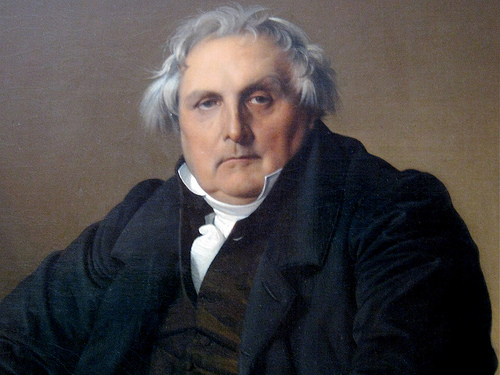
Ernest Renan
Ernest Renan (1823-1892) was a French Orientalist who was regarded highly until the Second World War. Since then, he seems to have fallen out of favor with the academia. Still, his principle of nationalism is so powerful that modern students of social sciences find it impossible to ignore it completely, in spite of their reluctance to consider it for application. Curiously enough, there is a connection between him and Iqbal and it is one that makes them indispensable to each other. Renan's passionate plea, which he made in the "Introduction" to his Collected Speeches in 1887, can take a completely new meaning if we read it in the light of Iqbal Studies. Renan had referred to his 1882 lecture "What Is A Nation?", and had said:
"I hope that these twenty pages will be recalled when modern civilization flounders as a result of the disastrous ambiguity of the words: nation, nationality, race."
Those "twenty pages", which Renan had hoped would save the world, became the intellectual premise for Iqbal's proposal about the birth of a new state. In his Allahabad Address, Iqbal quoted from this lecture of Renan in a manner which makes his own writing – also comprising of some twenty pages – a sequel to Renan's lecture, and could easily be subtitled "What Is A Nation? Part 2". Hence, the passionate warning of Renan that his lecture should be used for averting disasters may now be seen as directly addressed to Pakistanis (and by that implication to Bengalis and Indians in so far as the creation of Pakistan is a fact of their history too). They people cannot afford to disregard the warning of Renan even if the rest of the world forgets him. In their history, those twenty pages have played an actively role unlike anywhere else in the world. The key for understanding this is to consider three crucial references to Renan in the writings of Iqbal.

iqbal1910An independent critical attitude

"Our duty is carefully to watch the progress of human thought, and to maintain an independent critical attitude towards it." This is the advice which Iqbal offered to his readers at a certain stage, and it reflected a practice which he had followed throughout. A very good example of this "independent critical attitude" is his engagement with the thought of Renan.

Renan was a confirmed racist who believed colored races to be inferior and possibly unfit for self-rule. He also had serious disagreement with the Christian Church. His writings also concealed a hostility towards Islam (which did not go unnoticed by Iqbal). Yet, one of the notes which Iqbal jotted down in his private notebook, apparently as a reminder to himself, was about the need to see beyond such observations:
There are some people who are sceptical and yet of a religious turn of mind. The French Orientalist Renan reveals the essentially religious character of his mind in spite of his scepticism. We must be careful in forming our opinion about the character of men from their habits of thought. (Stray Reflections, p.73)
The benefit of this approach becomes evident when we look at how it helped Iqbal to engage with the powerful mind of Renan in a creative and original manner as we shall see now.

Religion as a people-building force
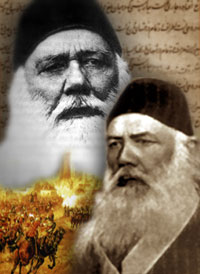
Sir Syed Ahmad Khan
In his 1882 paper, Renan had shown conclusively that geography, race, language or religion did not make a nation. About Islam, he had written somewhere that it was going to "lose the high intellectual and moral direction of an important part of the universe". Quoting this statement in his paper "The Muslim Community" (1911), Iqbal called it "a veiled hope" on Renan's part that Islam should thus fizzle out.


Yet he bypassed such quibbles and managed to meet Renan on the grounds of common principles. The first principle which Iqbal seems to have discerned from the writings of Renan was that any community, society or nation which hoped to hold itself together merely through belief in certain propositions of a metaphysical import was indeed standing on an extremely unsafe basis, especially before the advance of modern knowledge, with its habits of rationalism and criticism. (Iqbal, "The Muslim Community").

Acceptance of this empirical truth did not deter Iqbal from pursuing that new orientation of Islam which was gradually evolving in Muslim India: "Islam has a far deeper significance for us than merely religious." (Iqbal, "The Muslim Community"). This was the sum total of the cultural activities of the Indian Muslims since 1867 as well as of their social activism, their daily reality and their most valuable intellectual output, including the writings of Sir Syed Ahmad Khan, Syed Amir Ali, Maulana Shibli Numani – not to forget the poetry of Maulana Hali and Akbar Allahabadi, and the writings of young journalists like Muhammad Ali Jauhar and Zafar Ali Khan. The same collective will had also manifested in the recently formed All-India Muslim League, although the significance of that political organization was yet to be tested by history. Consequently, Iqbal made the very far-sighted proposition that the unity of religious belief in the Muslim community was supplemented by the uniformity of Muslim culture:
Mere belief in the Islamic principle, though exceedingly important, is not sufficient. In order to participate in the life of the communal self, the individual mind must undergo a complete transformation, and this transformation is secured, externally by the institutions of Islam, and internally by that uniform culture which the intellectual energy of our forefathers has produced.
Renan had described the evolution of modern European nations to show that diverse factors had gone into their making. Iqbal showed that in Asia, such factors had been provided by Islam, which had been working as much more than a religion. The vision of Islam which he offered was neither a set of metaphysical beliefs nor a two-dimensional study of "lived religion", but was through and through a people-building force (see "The Muslim Community").
This is important because Iqbal made a clear distinction between two very different roles of religion in a society. The first is what Renan had called "the absolute distinction between men in terms of their religion", and had shown to be inadequate for making a nation. Iqbal gave an implicit assent to this by stating, "Mere belief in the Islamic principle, though exceedingly important, is not sufficient," but he made an exception for religion as "a people-building force" – a phenomenon which Renan may not have realized because it was not manifested as clearly in Islam outside India as it did in Islam in India (and Renan was an authority mainly on the Middle East). As Iqbal was going to state very boldly in the Allahabad Address:
Indeed it is no exaggeration to say that India is perhaps the only country in the world where Islam, as a people-building force, has worked at its best.
This subtlety is obviously ignored by those who seek to reinforce the Islamic identity of Muslim societies in South Asia by introducing more rigid models of Islam from other parts of the Muslim world. It also seems to be forgotten by those who hope to make these societies more tolerant and enlightened by importing esoteric and metaphysical wisdom from abroad. At least in the case of Pakistan, this observation is also being ignored by those who propose to impose unpopular secularist oligarchies. All these reformers and adventurers would perhaps benefit by considering what Iqbal stated elsewhere: "The flame of life cannot be borrowed from others; it must be kindled in the temple of one’s own soul. This requires earnest preparation and a relatively permanent programme." (The Lahore Address, 1932).

The most interesting aspect of the connection between Renan and Iqbal is that it helps us restore Renan's principle of nationalism as a workable solution not only in Iqbal's society but perhaps also elsewhere in the world, and points in the direction of that empirical evidence which may qualify Renan's principle for being called, truly, "the spiritual principle of nationalism."

The spiritual principle of nationalism

Iqbal's poem refuting the territorial basis of nationalism in 1911We have seen that Renan, in his 1882 lecture, had refuted the presumptions of some earlier thinkers that nations could be formed on the basis of geography, race or language. This should be of special interest to the learners of Iqbal Studies, who very well know that Iqbal launched an ideological attack against these theories of nationalism, but most of them do not realize that Iqbal did so on a premise already established for him by another great thinker.

We have also seen that Renan's assumption that religion could not provide a feasible basis for nation-building was modified by Iqbal on the grounds that this could be true about a certain conception of religion but not about another conception that was most peculiarly evidenced among the Muslims of India.

Now we may come to consider the question that if geography, race, language or "absolute distinction between men on the basis of religion" does not define a nation, then what does? The answer which Renan provided was the spiritual principle of nationalism. It had two postulates. The first explained how modern nations were formed. The second answered how they could be sustained.

What makes a nation?

Renan claimed that it was an empirically verifiable fact that a modern nation was formed on the basis of two things:
  1. To have performed great deeds together; and
  2. To wish to perform still more.
To form a nation on any other basis – even on the basis of an "absolute distinction between men on the basis of religion" – would mean disregarding the consent of the individual, and hence a negation of free will and soul, and would fail. In the words of Renan:
A nation is a soul, a spiritual principle. Two things, which in truth are but one, constitute this soul or spiritual principle. One lies in the past, one in the present. One is the possession in common of a rich legacy of memories; the other is present-day consent, the desire to live together, the will to perpetuate the value of the heritage that one has received in an undivided form. Man, Gentlemen, does not improvise. The nation, like the individual, is the culmination of a long past of endeavours, sacrifice, and devotion. Of all cults, that of the ancestors is the most legitimate, for the ancestors have made us what we are. A heroic past, great men, glory (by which I understand genuine glory), this is the social capital upon which one bases a national idea. To have common glories in the past and to have a common will in the present; to have performed great deeds together, to wish to perform still more—these are the essential conditions for being a people.

What sustains a nation?

Once we accept that nations are founded on the basis of will, it follows naturally that they can only be sustained through consent, whether obtained implicitly or explicitly:
A nation's existence is, if you will pardon the metaphor, a daily plebiscite, just as an individual's existence is a perpetual affirmation of life. That, I know full well, is less metaphysical than divine right and less brutal than so called historical right. According to the ideas that I am outlining to you, a nation has no more right than a king does to say to a province: "You belong to me, I am seizing you." A province, as far as I am concerned, is its inhabitants; if anyone has the right to be consulted in such an affair, it is the inhabitant. A nation never has any real interest in annexing or holding on to a country against its will. The wish of nations is, all in all, the sole legitimate criterion, the one to which one must always return.

The Allahabad Address

This was the principle which Iqbal invoked while delivering his presidential address to the All-India Muslim League at Allahabad in December 1930. At that hour, when civilization was indeed floundering as a result of the disastrous ambiguity of the words nation, nationality, race, Iqbal may have been the only one, perhaps in the whole world, to actually turn to those twenty pages of Renan (among other things), as he stated:
“Man,” says Renan, “is enslaved neither by his race nor by his religion, nor by the course of rivers, nor by the direction of mountain ranges. A great aggregation of men, sane of mind and warm of heart, creates a moral consciousness which is called a nation.”  Such a formation is quite possible, though it involves the long and arduous process of practically re-making men and furnishing them with a fresh emotional equipment. It might have been a fact in India if the teachings of Kabir  and the Divine Faith of Akbar had seized the imagination of the masses of this country. Experience, however, shows that the various caste units and religious units in India have shown no inclination to sink their respective individualities in a larger whole. Each group is intensely jealous of its collective existence. The formation of the kind of moral consciousness which constitutes the essence of a nation in Renan’s sense demands a price which the peoples of India are not prepared to pay.
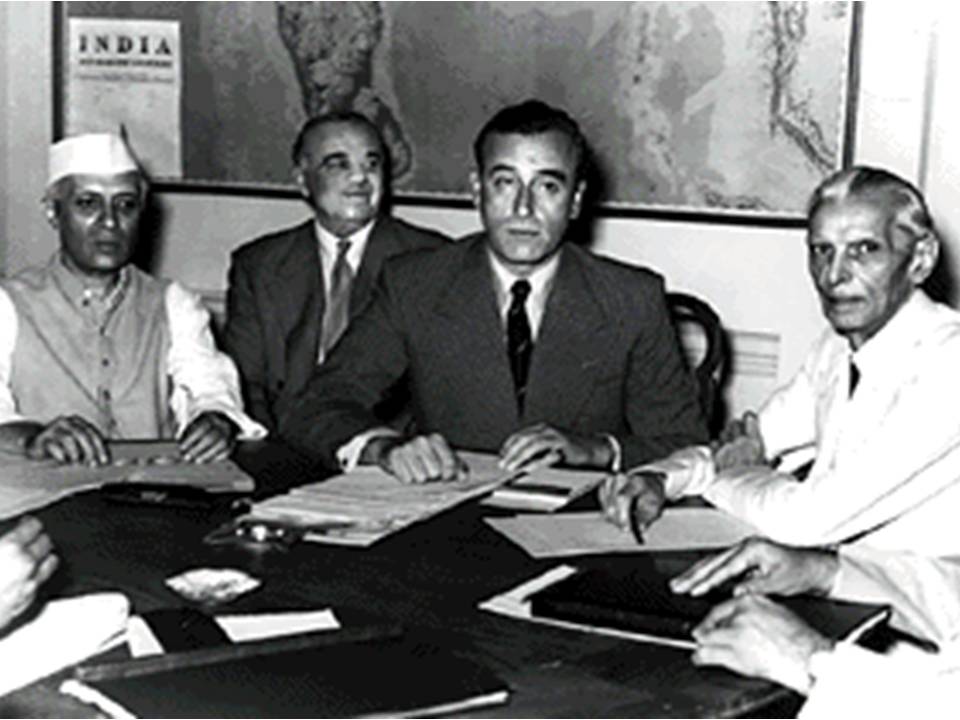
NehruMountbattenandJinnah1
"If doubts arise regarding its frontiers,
consult the populations in the areas under dispute."
Only one of the men in this picture could have felt happy
that Renan had said such a thing.

Conclusion

Renan did not offer his proposition as "a theory". He propounded it as an empirical principle and challenged his detractors to put it to empirical test. He was also aware that his European contemporaries were likely to discard his principle as "a fine example of those wretched French ideas which claim to replace diplomacy and war by childishly simple methods." Ruefully, he observed:
This recommendation will bring a smile to the lips of the transcendants of politics, these infallible beings who spend their lives deceiving themselves and who, from the height of their superior principles, take pity upon our mundane concerns.
It could be very rewarding to apply Renan's principle to a case study of the history of South Asia from 1887, and see what empirical evidence turns up. For this, we shall need to add the twenty pages of the Allahabad Address to the original twenty of Renan's What Is A Nation. Such a study has not been undertaken until now and still awaits some insightful and bold scholar.

cover


Further reading

Comments can be posted directly at Marghdeen Learning Centre.

Saturday, May 10, 2014

New Biography of Iqbal


Iqbal: His Life and Our Times
by Khurram Ali Shafique
has been released on May 8.
Buy it online from CreateSpace, Amazon, Amazon UK or Amazon India (among others).

This is a joint publication of Iqbal Academy Pakistan and the Cultural Institute of the Economic Cooperation Organization. The international edition has been brought out by Libredux UK. A Pakistan edition is expected by the end of May.

Continued support will be provided to readers and those interested in Iqbal Studies through this website and the Facebook Page of the Book.
Originally published on Marghdeen Learning Centre. 

Monday, May 5, 2014

Iqbal: His Life and Our Times

Cover design MelloWatts 
Originally published at Marghdeen Learning Centre

The mind of Goethe,
The heart of Rumi,
The message of the Quran.

This was the unparalleled legacy of the poet-philosopher credited with birthing a nation and a state, and at no other time has the world been more ready to embrace his ideas than it is right now. 


The story of his mind, and what he taught, as told herein from a new and compelling angle, leads us on a trail of discovery towards a new way of life. You're invited to approach this as a handbook for implementing his life-giving ideas.
The above-quoted blurb reflects the spirit in which my new book, Iqbal: His Life and Our Times, is being offered. The book is a tribute to Iqbal by ten sovereign states, since it is being published jointly by Iqbal Academy Pakistan and the Cultural Institute of the Economic Cooperation Organization, which is the successor organization of the RCD and now includes Afghanistan, Azerbaijan, Iran, Kazakhstan, Kyrgyz Republic, Pakistan, Tajikistan, Turkey, Turkmenistan and Uzbekistan.

The international edition is being brought out by Libredux, UK, on behalf of the original publishers. It will be available from Thursday, May 8.

It can be ordered from the page on the Createspace Website. It will also be available on other websites, including Amazon. The Pakistani edition is hopefully coming out by the end of this month.  

Much has been written about Iqbal but this book may turn out to be different (even from my earlier writings) because it presents Iqbal with a special focus on how his ideas can be implemented today - especially in Pakistan and the Muslim world, but also elsewhere - by individuals as well as societies. I have kept it less than 200 pages, so that it may serve as a compact handbook.

Until the book comes out this Thursday, I offer you following introduction written by two people for whom I have deep respect and gratitude.


Introduction
by 
Muhammad Suheyl Umar, Director, Iqbal Academy Pakistan;
and Iftikhar Arif, Director, ECO Cultural Institute (ECI)

Dr. Sir Muhammad Iqbal (1877-1938) is the only poet and thinker in the history of world literature who has been credited with the birth of a new nation and a new state. It is therefore very befitting that a handbook about his life and thought should be brought out by an organization comprising of ten member states. The Economic Cooperation Organization’s Cultural Institute (ECI) is pleased to bring out this publication jointly with Iqbal Academy Pakistan.

In addition to his unique status in Pakistan, Iqbal also happens to be either a national poet or a household inspiration in several other countries including Iran, Tajikistan, Kazakhstan, Kyrgyzstan, Turkmenistan, Uzbekistan and India. In Turkey, his symbolic grave stands in the compound of the mausoleum of Maulana Jalaluddin Rumi. In the universities of Heidelberg and Cambridge, there are chairs or fellowships in his name. Roads, buildings and monuments have been named after him in other countries too, including Mauritius.

Iqbal: His Life and Our Times fulfils the need for a simple and reliable introduction to the life and work of this unmatched genius, highlighting the practical relevance of his ideas for those who wish to consider them for implementation. The author, Khurram Ali Shafique, is well-known in the field of Iqbal Studies. The awards which he has received for his previous publications include the coveted Presidential Iqbal Award.

The present volume includes many findings that are the outcome of the author’s original research. Of special interest to the general readers as well as the experts would be the evidence, presented here for the first time, which establishes a historical connection between the political ideas of Iqbal, the American thinker Mary Parker Follett and the Bengali visionary C. R. Das. 

We are hoping that this volume will offer much by way of looking at the present times from new avenues. 

It is shown here that the views expressed by Iqbal in his poetry and prose formed a coherent system of thought, and the same was implemented by him through political and social action. 

This is to dispel the myth which has been preventing a deeper understanding of Iqbal’s thought until now, i.e. the false but widely perpetuated assumption that the ideas presented by Iqbal were either inconsistent with each other or they kept undergoing such perpetual changes throughout his life that they cannot be considered for implementation in any other time.

The system of his thought and its underlying principles are being presented here, perhaps for the first time. It is also being shown that in spite of its inner coherence, the system of Iqbal’s thought kept pace with the evolution of the collective life of his community. 

This evolution can be studied by dividing the intellectual life of the poet-philosopher into three stages: inquiry, discovery and transcendence. The duration of each stage has been established here on the basis of biographical and textual evidence, and the book has been divided into three chapters accordingly. 

Each of these three stages started in his mental life when his community adopted a new goal collectively. The goals, their relevance to the world and humanity, their implications for Iqbal, and his contribution towards achieving them are issues which are being discussed here in a fresh light. This may turn out be one of the most significant contributions which this book will make to the subject.

If nations of the world desire to come closer in their hearts and minds, they cannot ignore to learn about the ideas, emotions and visions of each other. The Economic Cooperation Organization’s Cultural Institute (ECI), formed through a charter at the third summit meeting of the countries of ECO held at Islamabad in 1995, aims at fostering understanding and the preservation of the rich cultural heritage of its members through common projects in the field of the media, literature, art, philosophy, sport and education. 

The present volume is being offered in line with this vision, and with the conviction that it is important for everybody to be informed about the ideas of Iqbal, since they may be counted among those cultural forces which have gone into shaping a significant part of our world.

This conviction is shared by Iqbal Academy Pakistan, a statutory body of the Government of Pakistan, originally established through an act of parliament in 1951 and reinforced through an ordinance in 1962. The aims and objectives of the Academy are to promote and disseminate the study and understanding of the works and teachings of Iqbal. The Academy has been translating its objectives into action and activity through a number of measures including publication programme, IT projects, outreach activities, Iqbal Award Programme, website, research and compilation, audio-video, multimedia, archive projects as well as exhibitions, conferences, seminars, projection abroad, research guidance, academic assistance, donations and library services.

We hope that the readers will benefit from the book which we are offering here jointly, and this will go a long way in achieving our common objectives.

Tuesday, April 1, 2014

Ayaz Amir: between ignorance and dishonesty


Ayaz Amir.
Image from The News International
I have read with great interest the recent article Poet of the soul, thy occasional silences’ by Ayaz Amir published in The NewsInternational on Friday, March 28. I am surprised to see that the esteemed writer is so unfamiliar with facts about the life and writings of Allama Iqbal, and has based his writing on sheer sentiment at the cost of truth.

He complains that ‘in all his work, so much of it transcendent, there is no mention of Jallianwala Bagh, an event which shook India. Nor did Iqbal take a public position on it.’ This is not true. Iqbal wrote a short but very moving poem in Urdu, in which he advised the reader not to withhold tears on the plight of those ‘martyrs’. The poem was published in newspapers at that time and has been included in several anthologies and biographies since then. It can also be found on page 460 in my Urdu biography of the middle years of Iqbal’s career, Iqbal: Darmiani Daur, which covers the period 1914-1922.

I am copying the poem here along with an English translation done by my friend, Akhtar Wasim Dar:

جلّیانوالہ باغ امرتسر
ہر زائرِ چمن سے یہ کہتی ہے خاکِ پاک
غافل نہ رہ جہان میں گردُوں کی چال سے

سینچا گیا ہے خونِ شہیداں سے اس کا تخم

تُو آنسووں کا بخل نہ کر اِس نہال سے

[Translation]: 
Jalianwalla Bagh Amritsar
The sacred land urges to every pilgrim of the garden
Not to remain inattentive in this world to the ways their destiny works.
Its seed has been watered by martyrs’ blood
Do not withhold your tears from its saplings.

Yet, Mr. Amir chooses to call the poetry of Iqbal ‘poetry at the same time silent on such a tragedy as the Jallianwala Bagh massacre’! We understand that it is really too much for some Pakistani journalists to stop telling lies, but one wonders what happened to the old-fashioned editorial discretion. I mean, seriously, does The New International not have even one well-informed person in its editorial team, who could have taken a look at Mr. Amir’s writing before it went to press? 

Mr. Amir is partially correct in suggesting that the holocaust which occurred in Punjab in 1947 was only indirectly linked to the partition of India and was more directly a result of the partition of Punjab. Yet, again I wonder from where did he get his information that Iqbal and the founding fathers of Pakistan did not foresee it (as he says, ‘Mention should also be made of a failure of the imagination or a failure of foresight, on Iqbal’s part as on that of the League leadership as a whole…the failure to see that if ever the demand for a north-west Muslim state was met, it would surely and inevitably entail the partition first of Punjab and then only of India’).

Talks about the partition of India, and the partitions of Punjab and Bengal, had started in the early 1920s. Therefore, it required neither imagination nor foresight on part of Iqbal and his club to see it – but of course it requires general knowledge and hindsight on part of Mr. Amir to know this (and how much we wish that Mr. Amir was in possession of either of these).

Ironically enough, the person who initiated the discourse about these partitions in 1921 was none other than Hasrat Mohani – the same about whom Mr. Amir has wished so melodramatically that there were ‘a few more Hasrat Mohanis’. Mohani made some bold suggestions to this end in his presidential address to the annual session of All-India Muslim League in 1921, and followed them up with even more radical propositions along these lines.

Lala Lajpat Rai, in sync with Hindu Mahasabha, answered Mohani by demanding the partition of Punjab as well as the partition of Bengal, and a partitioning of India between ‘a Hindu India and a Muslim India’. Rai did that in a series of thirteen articles, collectively titled ‘The Hindu-Muslim Problem’, which were published in November-December 1924 (apparently in view of the impending annual session of the Indian National Congress, since the annual sessions for the two preceding years had been consecutively presided over by advocates of Muslims nationalism, i.e. C. R. Das in 1922 and Maulana Muhammad Ali Jauhar in 1923, and their views were anathema to obscurantist leaders like Rai). 

Hence the Hindu demand for the partition of Punjab and Bengal was already on the table by the time Iqbal came out with his proposition for a consolidated Muslim state in 1930.

Mr. Amir complains that Iqbal did not say much about Bhagat Singh. Here, one cannot overlook the macabre irony that Bhagat Singh was out to take revenge for the death of the same Lala Lajpat Rai, who had originally demanded the partition of Punjab which Mr. Amir loathes so much (and given the overall quality of scholarship reflected in Mr. Amir’s writing, we cannot be sure if he is even aware of these facts). 

On a more serious note, while it is true that Iqbal did not say much about Bhagat Singh, many other freedom-fighters were also silent on that issue but this is not usually considered as sufficient ground for questioning their bonafide. Even Gandhi didn’t do much to save Bhagat Singh, and this does not bring down Gandhi from his high pedestal.

It seems that the underlying issue which Mr. Amir is trying to reach here is whether Iqbal was sufficiently opposed to British imperialism, and whether Iqbal did something to that effect. It is well-known even to the detractors of Iqbal that he took a very well-defined stand against colonialism, not only as a poet but even as a politician and social activist.

Granted that his stand was in keeping with his worldview, and anybody who disagrees with that worldview, like Mr. Amir does, is welcome to question whether Iqbal’s stand was effective or not. Unfortunately, such an exercise pre-requires a wider range of reading than Mr. Amir seems to be capable of, and therefore he takes the easier path of misleading his readers by stating, in clear contradiction to known facts, that Iqbal did not take a stand against colonialism at all. This is where Mr. Amir crosses the line between ignorance and intellectual dishonesty, in the direction of the latter.

In the passing, I would like to mention just one anecdote about Iqbal’s well-known opposition of British imperialism. The declassified documents in the archives of the former princely state of Hyderabad Deccan have revealed that when the ruler of that state was considering a proposal for granting patronage to Iqbal, he was advised by his counsellors against it on the grounds that Iqbal was too well-known for opposing British imperialism, and any patronage to Iqbal would displease the foreign rulers.

Pakistan is not suffering today because its founding fathers lacked moral courage or foresight, as Mr. Amir has tried to insinuate. It suffers today because a large majority of our educated class and our intelligentsia is unaware of the basic facts of our history, and Mr. Amir happens to be one sorry example of this. Maybe he is too old to change his habits now and start getting his facts right, but the younger lot should rise up to their moral duty and find out those truths about our history which need to be known.

Comments can be posted directly at the website of Marghdeen Learning Center.

Sunday, March 31, 2013

Spiritual Democracy

Six years ago, I wrote a fantasy about the great Sufi master Maulana Rumi changing the world after being elected the ruler of a kingdom. From this fantasy was derived the title of my book as well as this blog and the newsletter: The Republic of Rumi.

The inspiration behind that fantasy was the fact that the foremost disciple of Rumi in modern times was Iqbal, and he is actually being recognized as a national hero in several states. Pakistan claims to have been conceived by him. Some of the Central Asian states acknowledge him as a national poet. In Iran also, he is held in high esteem. Hence, through Iqbal, the spirit of Rumi has actually been taking over the affairs of states since the middle of the 20th Century, at least in some ways.

This was the meaning of the fantasy which I wrote six years ago. At that time it was not possible for me to show how the message and the influence of Iqbal can be used for actually creating the kind of government, commonwealth or world order that may be called a "republic of Rumi". I think, now I am in a position to share some interesting findings in this regards.

The keyword is "spiritual democracy". Iqbal stated in the sixth lecture of the Reconstruction (1930) that the ultimate aim of Islam was some kind of a "spiritual democracy". He said that it was to be evolved out of "the hitherto partially revealed purpose of Islam".

I feel that it may be a good idea if this blog and newsletter could be used mainly for elaborating this concept at least for some time. I hope that this suggestion would be welcome by most of the readers - and I would like to hear from you what you think about it.

Friday, March 22, 2013

Stray Reflections (2006)

Stray Reflections: the Private Notebook of Muhammad Iqbal (also includes 'Stray Thoughts'); Edited with Afterword by Dr. Javid Iqbal; Revised and Annotated by Khurram Ali Shafique; Appendix 'A Rare Writing of Iqbal' by Afzal Haq Qarshi

Published by Iqbal Academy Pakistan in 2006; reprinted a few times since then. Previous editions published in 1961 (reprinted 1987) and 1992.

pp.264

ISBN 969-416-003-0

Price 

Stray Reflections is the name given by Allama Iqbal to his private notebook, which he kept for some time in 1910 to jot down his random thoughts and reflections. Many of these notes were incorporated in his prose works at that time, and some were later offered for print in newspapers after revision. 

The notebook, which offers some insight into the development of Iqbal's mind, was first edited and published by Dr. Javid Iqbal, the poet's son, twenty-four years after the poet's death. 

The present revised edition is enriched by comprehensive notes and also includes 'Stray Thoughts', reflections of similar nature published by Iqbal at a later stage. Facsimiles of the original notebook in Iqbal's own hand are also included in this edition, making it a collector's item for anyone who is interested in the development of one of the greatest minds of the twentieth century.

Wednesday, March 20, 2013

Shakespeare According to Iqbal

Shakespeare According to Iqbal: An Alternative Reading of the Tempest by Khurram Ali Shafique

First published by Iqbal Academy Pakistan in 2010


ISBN 978-969-416-448-9


pp. 48

Price Rs. 70


Order online within Pakistan: marghdeen@gmail.com (visit online Bookstore for details).


Dr. Sir Muhammad Iqbal (1877-1938) was among those modern thinkers who had tremendous influence on the East, especially the Muslim world. He was also a great admirer of William Shakespeare, and unlike many of his contemporaries, his praise for the Bard was not riddled with skepticism. 


Here is a pioneering attempt by historian and playwright Khurram Ali Shafique to revisit Shakespeare in the light of Iqbal's thought in order to discover some revealing connections between the work of Shakespeare and outstanding poets of the East including Nezami Ganjavi, Mawlana Rumi and Iqbal himself. 
Partly written like an extended parable, this book is meant to be of some interest for the general reader as well as the expert in the field.

Tuesday, March 19, 2013

The Beast and the Lion (2007)

The Beast and the Lion: Issues of Transcendence in the Poetry of W. B. Yeats by Khurram Ali Shafique

First published in Pakistan by Iqbal Academy Pakistan in 2007


ISBN 978-969-416-398-7


pp.40


Price Rs.50


Order online within Pakistan: marghdeen@gmail.com (visit online Bookstore for details).


The poetry of W. B. Yeats is generally acclaimed to be representing the devastation, despair and decadence of the 20th Century. This groundbreaking study attempts to show that the vision of Yeats was grounded more in his philosophical premise than in the objective reality of his times. Contrary to the common perception of Yeats as a cosmopolitan visionary who has something to offer everyone, this study shows that the terror projected in such poems as "The Second Coming" was a fear of the political reawakening of the East!

Monday, March 18, 2013

Iqbal: an Illustrated Biography

Iqbal: an Illustrated Biography by Khuram Ali Shafique

First published by Iqbal Academy Pakistan in 2006; reprinted 2006, 2009, 2010, 2012

pp. 208 (US Letter size, full-color coffee-table format)

Price Rs.1000

Recipient of the Presidential Iqbal Award
Believing in the elemental unity of matter and spirit, he pointed out that all humanity was one. Anything that divides the human race is evil and must be opposed. The ideal to be achieved is a world free from poverty and tyranny. He believed that it was possible, and offered a spiritual solution to achieve this end. His observations seem strikingly contemporary today.

This is the fascinating story of the life and times of the man who defied the cynicism of his age and upheld his belief in the future of the humankind, their glory and their possible immortality.

Iqbal: an Illustrated Biography is arranged like a library of information, visual and documentary records, and memorabilia about one of the most important minds of the modern times.

From the comment by Dr. Javid Iqbal
Printed on the back title

...This book is a commendable effort to bring together the various aspects of Iqbal in an interesting manner with visual embellishment. It is a one-volume encyclopedia of his life, work and times.

From the comment by Shamsur Rahman Faruqi
Printed on the back title

...The present book is an encyclopedic biography that covers all these aspects of the mind of Iqbal, without removing him from his various contexts: his time, his beautiful expression, and his unconditional faith in a common future for humanity.

Sunday, March 17, 2013

The Republic of Rumi: a Novel of Reality (2007)


The Republic of Rumi: a Novel of Reality by Khurram Ali Shafique

First published by Iqbal Academy Pakistan in 2007;

reprinted 2009 and 2012

ISBN 978-969-416-388-8


Price Rs.300

Order online within Pakistan: marghdeen@gmail.com (visit online Bookstore for details).


Inside the Garden lies a secret as old as life itself but you must leave everything outside - even your previous knowledge. This is a fascinating voyage of discovery that stops at nothing short of reaching into the heart of the matter - and spirit.

Iqbal reinterpreted Rumi for our times, and now Iqbal has been reinterpreted for the times to come.

What you will discover here may be of a permanent relevance to your life and life in general, which may be better explained now in terms such as the Five Wisdoms, the Seven Stages of the Journey, the Fountain of Life, Jamshid's Cup, the Dance of the Soul, the Falcon and the Leopard and, of course, Joseph!

Comment from Muhammad Suyel Umar, Director, Iqbal Academy Pakistan
Printed on the flap of the dust cover in the book

Khurram Ali Shafique is the first Iqbal scholar to have completed a much-needed requirement in Iqbal Studies that was being pointed out by the scholars for the last few decades.

It has been said about the Quran that "part of it explains other parts of it" and the internal coherence in the writings of Dr. Sir Muhammad Iqbal (1877-1938) had for long seemed to be inspired from this aspect of the Divine Word. The thread that runs through his poetry and the function of his lectures as an explanation of his poetry were all aspects that were touched in Iqbal Studies briefly but no has ever attempted to articulate the architectural whole of Iqbal's canon in order to show the intricacy of the design intended by the author himself. This is what Shafique has done in The Republic of Rumi through a narrative that is remarkably readable and accessible without losing the depth that should be expected in such a work.

This is a book for our times and of our times.

Comment from Ahmad Javed, Deputy Director, Iqbal Academy Pakistan
Printed on the back title of the book

This book takes you a long way on the path devised by Iqbal in order that Rumi's system of mysteries could seep into the deepest possible recesses of human consciousness.

Saturday, October 13, 2012

Reconstruction: an Overview

A king entrusted his son to a team of scholars and they taught him numerous sciences until he became a complete master in spite of himself. Then the king put a ring in his fist and asked his son to make a guess. The son replied, "What you hold in your hand is round, yellow, inscribed and hollow." Overjoyed, the king asked him to name it and he replied, "It must be a sieve."

"Alas!" Said the king. "You gave all the details that would baffle the minds of anyone, but the small point has escaped you that the sieve will not fit in a fist?"

Remember this story when approaching The Reconstruction of Religious Thought in Islam, since the immense richness of that book can easily lead a reader to become overwhelmed with detail and miss the point - even due to the same reason which Rumi ascribed to the prince after narrating that story: 
...the great scholars of the age split hairs on details of all matters... but as for what is truly of importance and touches us more closely than anything else, namely our own self, this your great scholars do not know. They make statements about everything, saying, “This is true and that is not true. This is right and that is wrong.” Yet, they do not know their own self, whether it is true or false, pure or impure.
In my endeavour to understand the Reconstruction, I have tried to list the key statement of each of the seven lectures and the preface. Personally I find it easier to "swim" through this ocean of a book by having this bird's eye-view first. The list is by no means definitive, and other readers of the book may come up with a different set, but I am offering these key statements here for facilitating discussion.

Religious faith ultimately rests on a living experience of the king of biological unity implied in the Quranic verse: "Your creation and resurrection are like the creation and resurrection of a single soul." (31:28)
Thought and intuition are organically related. All forms of intuition can be studied systematically, just like other thought processes. In principles, this is even true about revelation (وحی) of prophets even though we may not be practically equipped for carrying out such a study at present.
Systematic study of revelation involves the appreciative side of our self as well as its efficient side.
Our thought can also rise higher than itself and recognize five elements in our conception of God: that He is (a) Eternal; (b) Powerful; (c) Knowing; (d) Creative; and (e) Infinite Ego.
Human being is a unity of life that can be best described as an ego (خودی): an intuitive unity that illuminates our consciousness. It is possible for this entity to survive after death.
The cultural world of Islam has sprung out of the Unitive experience (معراج) of the Prophet (peace be upon him). Its cornerstone is the realization that humanity has outgrown the need for prophet-hood, priesthood or hereditary kingship. Therefore, the birth of Islam is the birth of inductive intellect.
The essence of the Unity of God (توحید), as a working idea, is equality, solidarity, and freedom. The ultimate aim of Islam is a spiritual democracy, for which the present-day Muslims are better equipped than those in any previous time.
In its higher manifestations, religion is neither dogma, nor priesthood, nor ritual but a deliberate enterprise to seize the ultimate principle of value and thereby to reintegrate the forces of one’s own personality.

Thursday, August 30, 2012

A syllabus for "Marghdeen"

As suggested in a previous post, it appears that in every domain of knowledge the current perceptions are just the opposite of Iqbal's. In 2017: The Battle of Marghdeen, I have tried to make a list of five key differences, for those who may be interested.

My contention is that our perception of our world changes drastically if we adopt these changes. In my understanding, much of what has been written about the ideas of Iqbal has suffered from the fact that writers, especially after 1953, passively accepted the academically accepted premise in every domain of knowledge and attempted to interpret Iqbal accordingly. Whereas, I believe, Iqbal questioned those very positions.

Further details can be found in 2017, and the supporting evidence for these statements is abundantly available in my third biography of Iqbal recently published by Iqbal Academy Pakistan in Urdu. Each statement forms the main objective of an online course at Marghdeen Learning Centre.

1. History:

  • We are usually told that the present times are an age of spiritual decline (a view which was originally articulated by Oswald Spengler and H.G. Wells during and after the First World War).
  • We need to know that Iqbal believed the world to be already on the verge of “a great spiritual and cultural revolution” in 1923. He believed that Nature was “building up in the depths of life a new human being and a new world for him to live in” and therefore the spirit of modern times is fully consonant with spiritual advancement.

2. Art and Literature:
  • We are usually told that pessimistic art and literature are more worthy of respect and attention than those products which present a desirable fantasy (an idea popularized by the French poet Charles Baudelaire in 1857, who called his poems The Flowers of Evil and described hypocrisy to be his ideal).
  • We need to know that art and literature are collective dreams that come true, according to Iqbal. Therefore, they should present the world as it should be, and not as it appears to be.

3. Politics:
  • We are usually told that democracy is against the spirit of Islam (a point of view popularized by scholars like A. J. Arberry, who pioneered an intellectual movement against Islam, Pakistan and Iqbal in 1953).
  • We need to know that “Democracy, then, is the most important aspect of Islam regarded as a political ideal,” according to Iqbal, as he stated in a seminal paper in 1909 (all his political views, which he offered subsequently, were elaborations on this basic idea).

4. Religion and Science:
  • We are usually told that religion and science are locked in a perpetual conflict.
  • We need to know that Iqbal observed in 1930, “The day is not far off when Religion and Science may discover hitherto unsuspected mutual harmonies.” By that estimate, we should be able to discover those mutual harmonies now.

5. Education:
  • We are usually told that education is either an end in itself or preparation for a career.
  • We need to know that “Education, like other things, is determined by the needs of a community,” according to Iqbal. Chief among these needs is to achieve “a real collective ego” by passing on the common ideals of the society from generation to generation.

Tuesday, August 28, 2012

Iqbal Studies: a New Beginning


Did you find it difficult to download 2017: The Battle for Marghdeen from Smashwords? Just email me, and I shall send you the PDF. However, the advantage of registering with Smashwords is that you can review the book on their website and enjoy other privileges of membership.


Soon after reading the book, my senior friend and veteran educationist Dr. Irfan Hyder wrote to me: 

"This may be a summary or a prologue to a much more voluminous undertaking or multiple volumes effort."
Actually, this is true. 2017 is a summary of key points which are being elaborated in some 6000 pages in the series of six books of Iqbal's biography in Urdu (the third book was recently published, as you may remember).

It all started with the awareness that Iqbal Studies cannot be and should not be the study of Iqbal in the light of existing paradigms. Unfortunately, that has been generally the case. Some Iqbal scholars may disagree with me but it is my honest and humble opinion that we have only seen Iqbal through the eyes of the world and never seen the world through the eyes of Iqbal.

This problem was pointed out by Iqbal himself and his earliest friends and followers as early as the 1920s. I have offered substantial evidence in the recently published third book of Iqbal's biography, Iqbal Darmiani Daur. See, for instance, my account of A Voice from the East, the first full-length monograph about Iqbal written and published by his associate Sir Zulfiqar Ali Khan in 1922. Many of the reviews published in Urdu after the English translation of 'Asrar-i-Khudi' have also been excerpted in my book, and they voice the same concern. The concern was voiced most boldly by Waheed Ahmad Masud, whose excellent article has been included in entirety as appendix in my book, for this very reason.

The major concern voiced by all these writers, headed by Iqbal himself, was that it is not sufficient to see Iqbal from the perspective of the existing knowledge, whether Eastern or Western. In fact, it could be dangerous and misleading. Instead of seeing Iqbal through the eyes of the world (or at least in addition to doing so), we must also see the world through the eyes of Iqbal.

This was the line of thinking that led to the creation of Pakistan. Unfortunately, it was abandoned almost completely soon after the birth of Pakistan. 

If we look at the aims and objectives listed in the journals of Iqbal Studies started in Pakistan in the 1950s,  we see a list of subjects in which Iqbal was interested or which had been touched upon in his writings, such as history, literature, social sciences, religion, education and so on. There is no mention that these subjects need to be studied in the light of Iqbal's views.

Quite the contrary, an unwritten convention soon developed that Iqbal's views on all the subjects must be regarded as "dated" (actually, as "outdated"). Since Iqbal had died in 1938, the views and theories which had emerged in social sciences and humanities after that time should be followed and the works of Iqbal should only be interpreted in the light of these new theories.

This is the convention which I want to challenge, and challenge it boldly. I understand that I shall end up offending many Iqbal scholars (some of them very well-meaning), but it is my humble and honest opinion that the name "Iqbal Studies" can only be given to the study of things from the perspective of Iqbal, and not to anything else.
  • To study the philosophical ideas of Iqbal in the light of existing conventions of philosophy is not Iqbal Studies. It is just the subject of Philosophy, with Iqbal added to the syllabus.
  • To study the poetry of Iqbal in the light of existing conventions of literary criticism is not Iqbal Studies. It is just Urdu Literature, or Persian Literature, and so on.
  • So on with history, religion, science and education.
This is not just an academic debate. It is a matter of life and death (in my opinion, and I do not mean any disrespect to those who may think that I am exaggerating).

I say this because in every field of study - in every area of human perception and understanding - the results change drastically when the principles of Iqbal are applied independently. In some areas, what we consider medicine is poison according to Iqbal and what we usually shun as poison is the necessary food according to him, without which we may die.

For Pakistan, the major implication is that we find a clearly defined list of options from which we can choose in order to solve our present problems and, perhaps, turn Pakistan into a world leader with least resistance and minimum effort. For the world, it holds a promise of peace, happiness and self-discovery on an unimaginable scale.

This is what I have tried to describe in 2017, and the supporting evidence is coming out in thousands of pages in the six-book series of Iqbal's biography.

Monday, August 13, 2012

Book launch tonight: "Online"


Would you like a free ebook of 2017: The Battle for Marghdeen as soon as it is published tonight? Some coupons will be made available from this blog for a limited time.
Marghdeen is an ideal city presented by Iqbal in Javid Nama. There is no poverty, crime or injustice. Life is inside-out and people know their destinies. 
In my new book, 2017, I have tried to explain that Marghdeen is a parable about our times. It describes what can be achieved today, if we are willing to understand the principles and bring a change in how we see the world. 
The book is just 80 pages, but has taken me five years to write. I hope that everybody will find it readable and interesting - some kind of "non-fiction thriller". 
It will be released electronically by Libredux, UK, tonight at midnight when Pakistan celebrates its 65th Independence Day. A special post will be uploaded on this blog and sent out in the newsletter at that time. 

Saturday, August 11, 2012

Friday, August 10, 2012

Indian Nationalism

The first session of Indian National Congress, 1885


It is extremely interesting to watch the birth and growth of a new ideal among a people. O! the enthusiasm it inspires and the force with which it attracts all the energies of a people to one common centre. The modern Hindu is quite a phenomenon. To me his behaviour is more of a psychological than a political study. It seems that the ideal of political freedom which is an absolutely new experience to him has seized his entire soul, turning the various streams of his energy from their wonted channels and bringing them to pour forth their whole force into this new channel of activity. When he has passed through this experience he will realise his loss. He will be transformed into an absolutely new people – new in the sense that he will no longer find himself dominated by the ethical ideals of his ancestors whose sublime fancies have been a source of perpetual consolation to many a distressed mind. Nations are mothers of ideals; but ideals, in course of time, become pregnant and give birth to new nations.
Iqbal, 1910
Please post comments at Selfless Devotion

Tuesday, August 7, 2012

My two new books

اقبال: درمیانی دَور


This Ramazan, I am announcing two new books. The first is Iqbal: Darmiani Daur (Urdu). The other will be a non-fiction thriller, released internationally on the midnight of August 14 (Pakistan Standard Time) - for a reason.

In January 1914, the nations of the East were at their lowest ebb. The Ottoman Empire had been recently humiliated in Tripoli and Balkans. The Muslim states of Northern Africa were being devoured by European powers, one by one. Persia's vulnerability to the expansionist designs of Russia and Britain had been exposed. Afghanistan was hardly independent and South Asia was under the British rule.

Nine years later, by December 1922, East was rejoicing in its awakening and brimming with confidence. Turkey had emerged as a new republic, promising to be more stable than the war-weary nations of Europe. British India was shaking with a full-scale movement for independence, more widespread and better organized than the "mutiny" of 1857. Afghanistan had regained full independence and started to modernize itself. Persia and Egypt were on the verge of regaining their past glories. Morocco had inflicted humiliating defeat on Spanish invaders, using guerilla techniques that were already inspiring a young Mao Tse-tung in China, and would later serve as role model for Che Guevara.

How did this happen? This is the question which I have tried to answer in my new book, Iqbal: Darmiani Daur. It is a biography of Iqbal in the middle years of his life: 1914 to 1922. However, it is much more than a biography. I am trying to tell a true story that has never been told before, and the story is not about the past. It is about the origins of our present.

The book is almost one thousand pages, and the cover price is Rs.1000 (One Thousand Rupees). However, discounts are available since the publisher, Iqbal Academy Pakistan, is dedicated to spreading the message of Iqbal. If you are interested, kindly let me know and I shall see how the book can reach you as conveniently as possible.

More to follow...