Pages

Showing posts with label Politics. Show all posts

Sunday, June 1, 2014

Renan and Iqbal: the Spiritual Principle of Nationalism

By Khurram Ali Shafique

Man is enslaved neither by his race nor by his religion, nor by the course of rivers, nor by the direction of mountain ranges. A great aggregation of men, sane of mind and warm of heart, creates a moral consciousness which is called a nation. (Ernest Renan, quoted by Iqbal in the Allahabad Address)
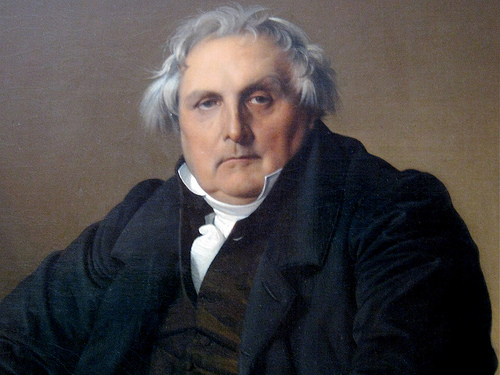
Ernest Renan
Ernest Renan (1823-1892) was a French Orientalist who was regarded highly until the Second World War. Since then, he seems to have fallen out of favor with the academia. Still, his principle of nationalism is so powerful that modern students of social sciences find it impossible to ignore it completely, in spite of their reluctance to consider it for application. Curiously enough, there is a connection between him and Iqbal and it is one that makes them indispensable to each other. Renan's passionate plea, which he made in the "Introduction" to his Collected Speeches in 1887, can take a completely new meaning if we read it in the light of Iqbal Studies. Renan had referred to his 1882 lecture "What Is A Nation?", and had said:
"I hope that these twenty pages will be recalled when modern civilization flounders as a result of the disastrous ambiguity of the words: nation, nationality, race."
Those "twenty pages", which Renan had hoped would save the world, became the intellectual premise for Iqbal's proposal about the birth of a new state. In his Allahabad Address, Iqbal quoted from this lecture of Renan in a manner which makes his own writing – also comprising of some twenty pages – a sequel to Renan's lecture, and could easily be subtitled "What Is A Nation? Part 2". Hence, the passionate warning of Renan that his lecture should be used for averting disasters may now be seen as directly addressed to Pakistanis (and by that implication to Bengalis and Indians in so far as the creation of Pakistan is a fact of their history too). They people cannot afford to disregard the warning of Renan even if the rest of the world forgets him. In their history, those twenty pages have played an actively role unlike anywhere else in the world. The key for understanding this is to consider three crucial references to Renan in the writings of Iqbal.

iqbal1910An independent critical attitude

"Our duty is carefully to watch the progress of human thought, and to maintain an independent critical attitude towards it." This is the advice which Iqbal offered to his readers at a certain stage, and it reflected a practice which he had followed throughout. A very good example of this "independent critical attitude" is his engagement with the thought of Renan.

Renan was a confirmed racist who believed colored races to be inferior and possibly unfit for self-rule. He also had serious disagreement with the Christian Church. His writings also concealed a hostility towards Islam (which did not go unnoticed by Iqbal). Yet, one of the notes which Iqbal jotted down in his private notebook, apparently as a reminder to himself, was about the need to see beyond such observations:
There are some people who are sceptical and yet of a religious turn of mind. The French Orientalist Renan reveals the essentially religious character of his mind in spite of his scepticism. We must be careful in forming our opinion about the character of men from their habits of thought. (Stray Reflections, p.73)
The benefit of this approach becomes evident when we look at how it helped Iqbal to engage with the powerful mind of Renan in a creative and original manner as we shall see now.

Religion as a people-building force
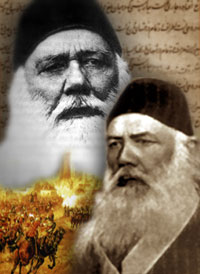
Sir Syed Ahmad Khan
In his 1882 paper, Renan had shown conclusively that geography, race, language or religion did not make a nation. About Islam, he had written somewhere that it was going to "lose the high intellectual and moral direction of an important part of the universe". Quoting this statement in his paper "The Muslim Community" (1911), Iqbal called it "a veiled hope" on Renan's part that Islam should thus fizzle out.


Yet he bypassed such quibbles and managed to meet Renan on the grounds of common principles. The first principle which Iqbal seems to have discerned from the writings of Renan was that any community, society or nation which hoped to hold itself together merely through belief in certain propositions of a metaphysical import was indeed standing on an extremely unsafe basis, especially before the advance of modern knowledge, with its habits of rationalism and criticism. (Iqbal, "The Muslim Community").

Acceptance of this empirical truth did not deter Iqbal from pursuing that new orientation of Islam which was gradually evolving in Muslim India: "Islam has a far deeper significance for us than merely religious." (Iqbal, "The Muslim Community"). This was the sum total of the cultural activities of the Indian Muslims since 1867 as well as of their social activism, their daily reality and their most valuable intellectual output, including the writings of Sir Syed Ahmad Khan, Syed Amir Ali, Maulana Shibli Numani – not to forget the poetry of Maulana Hali and Akbar Allahabadi, and the writings of young journalists like Muhammad Ali Jauhar and Zafar Ali Khan. The same collective will had also manifested in the recently formed All-India Muslim League, although the significance of that political organization was yet to be tested by history. Consequently, Iqbal made the very far-sighted proposition that the unity of religious belief in the Muslim community was supplemented by the uniformity of Muslim culture:
Mere belief in the Islamic principle, though exceedingly important, is not sufficient. In order to participate in the life of the communal self, the individual mind must undergo a complete transformation, and this transformation is secured, externally by the institutions of Islam, and internally by that uniform culture which the intellectual energy of our forefathers has produced.
Renan had described the evolution of modern European nations to show that diverse factors had gone into their making. Iqbal showed that in Asia, such factors had been provided by Islam, which had been working as much more than a religion. The vision of Islam which he offered was neither a set of metaphysical beliefs nor a two-dimensional study of "lived religion", but was through and through a people-building force (see "The Muslim Community").
This is important because Iqbal made a clear distinction between two very different roles of religion in a society. The first is what Renan had called "the absolute distinction between men in terms of their religion", and had shown to be inadequate for making a nation. Iqbal gave an implicit assent to this by stating, "Mere belief in the Islamic principle, though exceedingly important, is not sufficient," but he made an exception for religion as "a people-building force" – a phenomenon which Renan may not have realized because it was not manifested as clearly in Islam outside India as it did in Islam in India (and Renan was an authority mainly on the Middle East). As Iqbal was going to state very boldly in the Allahabad Address:
Indeed it is no exaggeration to say that India is perhaps the only country in the world where Islam, as a people-building force, has worked at its best.
This subtlety is obviously ignored by those who seek to reinforce the Islamic identity of Muslim societies in South Asia by introducing more rigid models of Islam from other parts of the Muslim world. It also seems to be forgotten by those who hope to make these societies more tolerant and enlightened by importing esoteric and metaphysical wisdom from abroad. At least in the case of Pakistan, this observation is also being ignored by those who propose to impose unpopular secularist oligarchies. All these reformers and adventurers would perhaps benefit by considering what Iqbal stated elsewhere: "The flame of life cannot be borrowed from others; it must be kindled in the temple of one’s own soul. This requires earnest preparation and a relatively permanent programme." (The Lahore Address, 1932).

The most interesting aspect of the connection between Renan and Iqbal is that it helps us restore Renan's principle of nationalism as a workable solution not only in Iqbal's society but perhaps also elsewhere in the world, and points in the direction of that empirical evidence which may qualify Renan's principle for being called, truly, "the spiritual principle of nationalism."

The spiritual principle of nationalism

Iqbal's poem refuting the territorial basis of nationalism in 1911We have seen that Renan, in his 1882 lecture, had refuted the presumptions of some earlier thinkers that nations could be formed on the basis of geography, race or language. This should be of special interest to the learners of Iqbal Studies, who very well know that Iqbal launched an ideological attack against these theories of nationalism, but most of them do not realize that Iqbal did so on a premise already established for him by another great thinker.

We have also seen that Renan's assumption that religion could not provide a feasible basis for nation-building was modified by Iqbal on the grounds that this could be true about a certain conception of religion but not about another conception that was most peculiarly evidenced among the Muslims of India.

Now we may come to consider the question that if geography, race, language or "absolute distinction between men on the basis of religion" does not define a nation, then what does? The answer which Renan provided was the spiritual principle of nationalism. It had two postulates. The first explained how modern nations were formed. The second answered how they could be sustained.

What makes a nation?

Renan claimed that it was an empirically verifiable fact that a modern nation was formed on the basis of two things:
  1. To have performed great deeds together; and
  2. To wish to perform still more.
To form a nation on any other basis – even on the basis of an "absolute distinction between men on the basis of religion" – would mean disregarding the consent of the individual, and hence a negation of free will and soul, and would fail. In the words of Renan:
A nation is a soul, a spiritual principle. Two things, which in truth are but one, constitute this soul or spiritual principle. One lies in the past, one in the present. One is the possession in common of a rich legacy of memories; the other is present-day consent, the desire to live together, the will to perpetuate the value of the heritage that one has received in an undivided form. Man, Gentlemen, does not improvise. The nation, like the individual, is the culmination of a long past of endeavours, sacrifice, and devotion. Of all cults, that of the ancestors is the most legitimate, for the ancestors have made us what we are. A heroic past, great men, glory (by which I understand genuine glory), this is the social capital upon which one bases a national idea. To have common glories in the past and to have a common will in the present; to have performed great deeds together, to wish to perform still more—these are the essential conditions for being a people.

What sustains a nation?

Once we accept that nations are founded on the basis of will, it follows naturally that they can only be sustained through consent, whether obtained implicitly or explicitly:
A nation's existence is, if you will pardon the metaphor, a daily plebiscite, just as an individual's existence is a perpetual affirmation of life. That, I know full well, is less metaphysical than divine right and less brutal than so called historical right. According to the ideas that I am outlining to you, a nation has no more right than a king does to say to a province: "You belong to me, I am seizing you." A province, as far as I am concerned, is its inhabitants; if anyone has the right to be consulted in such an affair, it is the inhabitant. A nation never has any real interest in annexing or holding on to a country against its will. The wish of nations is, all in all, the sole legitimate criterion, the one to which one must always return.

The Allahabad Address

This was the principle which Iqbal invoked while delivering his presidential address to the All-India Muslim League at Allahabad in December 1930. At that hour, when civilization was indeed floundering as a result of the disastrous ambiguity of the words nation, nationality, race, Iqbal may have been the only one, perhaps in the whole world, to actually turn to those twenty pages of Renan (among other things), as he stated:
“Man,” says Renan, “is enslaved neither by his race nor by his religion, nor by the course of rivers, nor by the direction of mountain ranges. A great aggregation of men, sane of mind and warm of heart, creates a moral consciousness which is called a nation.”  Such a formation is quite possible, though it involves the long and arduous process of practically re-making men and furnishing them with a fresh emotional equipment. It might have been a fact in India if the teachings of Kabir  and the Divine Faith of Akbar had seized the imagination of the masses of this country. Experience, however, shows that the various caste units and religious units in India have shown no inclination to sink their respective individualities in a larger whole. Each group is intensely jealous of its collective existence. The formation of the kind of moral consciousness which constitutes the essence of a nation in Renan’s sense demands a price which the peoples of India are not prepared to pay.
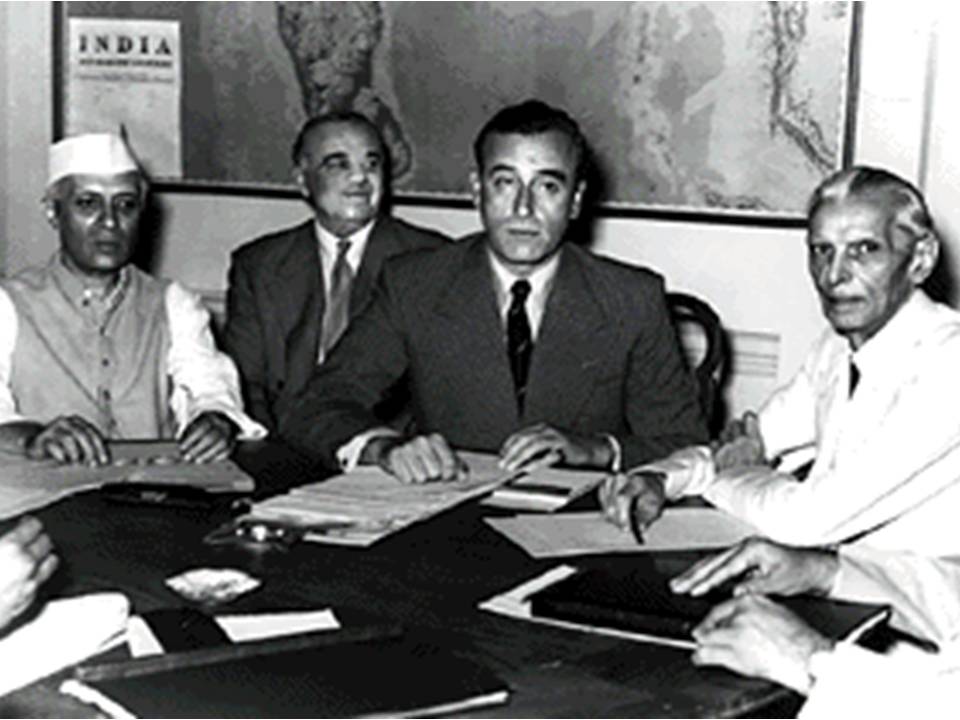
NehruMountbattenandJinnah1
"If doubts arise regarding its frontiers,
consult the populations in the areas under dispute."
Only one of the men in this picture could have felt happy
that Renan had said such a thing.

Conclusion

Renan did not offer his proposition as "a theory". He propounded it as an empirical principle and challenged his detractors to put it to empirical test. He was also aware that his European contemporaries were likely to discard his principle as "a fine example of those wretched French ideas which claim to replace diplomacy and war by childishly simple methods." Ruefully, he observed:
This recommendation will bring a smile to the lips of the transcendants of politics, these infallible beings who spend their lives deceiving themselves and who, from the height of their superior principles, take pity upon our mundane concerns.
It could be very rewarding to apply Renan's principle to a case study of the history of South Asia from 1887, and see what empirical evidence turns up. For this, we shall need to add the twenty pages of the Allahabad Address to the original twenty of Renan's What Is A Nation. Such a study has not been undertaken until now and still awaits some insightful and bold scholar.

cover


Further reading

Comments can be posted directly at Marghdeen Learning Centre.

Tuesday, April 1, 2014

Ayaz Amir: between ignorance and dishonesty


Ayaz Amir.
Image from The News International
I have read with great interest the recent article ‘Poet of the soul, thy occasional silences’ by Ayaz Amir published in The NewsInternational on Friday, March 28. I am surprised to see that the esteemed writer is so unfamiliar with facts about the life and writings of Allama Iqbal, and has based his writing on sheer sentiment at the cost of truth.

He complains that ‘in all his work, so much of it transcendent, there is no mention of Jallianwala Bagh, an event which shook India. Nor did Iqbal take a public position on it.’ This is not true. Iqbal wrote a short but very moving poem in Urdu, in which he advised the reader not to withhold tears on the plight of those ‘martyrs’. The poem was published in newspapers at that time and has been included in several anthologies and biographies since then. It can also be found on page 460 in my Urdu biography of the middle years of Iqbal’s career, Iqbal: Darmiani Daur, which covers the period 1914-1922.

I am copying the poem here along with an English translation done by my friend, Akhtar Wasim Dar:

جلّیانوالہ باغ امرتسر
ہر زائرِ چمن سے یہ کہتی ہے خاکِ پاک
غافل نہ رہ جہان میں گردُوں کی چال سے

سینچا گیا ہے خونِ شہیداں سے اس کا تخم

تُو آنسووں کا بخل نہ کر اِس نہال سے

[Translation]: 
Jalianwalla Bagh Amritsar
The sacred land urges to every pilgrim of the garden
Not to remain inattentive in this world to the ways their destiny works.
Its seed has been watered by martyrs’ blood
Do not withhold your tears from its saplings.

Yet, Mr. Amir chooses to call the poetry of Iqbal ‘poetry at the same time silent on such a tragedy as the Jallianwala Bagh massacre’! We understand that it is really too much for some Pakistani journalists to stop telling lies, but one wonders what happened to the old-fashioned editorial discretion. I mean, seriously, does The New International not have even one well-informed person in its editorial team, who could have taken a look at Mr. Amir’s writing before it went to press? 

Mr. Amir is partially correct in suggesting that the holocaust which occurred in Punjab in 1947 was only indirectly linked to the partition of India and was more directly a result of the partition of Punjab. Yet, again I wonder from where did he get his information that Iqbal and the founding fathers of Pakistan did not foresee it (as he says, ‘Mention should also be made of a failure of the imagination or a failure of foresight, on Iqbal’s part as on that of the League leadership as a whole…the failure to see that if ever the demand for a north-west Muslim state was met, it would surely and inevitably entail the partition first of Punjab and then only of India’).

Talks about the partition of India, and the partitions of Punjab and Bengal, had started in the early 1920s. Therefore, it required neither imagination nor foresight on part of Iqbal and his club to see it – but of course it requires general knowledge and hindsight on part of Mr. Amir to know this (and how much we wish that Mr. Amir was in possession of either of these).

Ironically enough, the person who initiated the discourse about these partitions in 1921 was none other than Hasrat Mohani – the same about whom Mr. Amir has wished so melodramatically that there were ‘a few more Hasrat Mohanis’. Mohani made some bold suggestions to this end in his presidential address to the annual session of All-India Muslim League in 1921, and followed them up with even more radical propositions along these lines.

Lala Lajpat Rai, in sync with Hindu Mahasabha, answered Mohani by demanding the partition of Punjab as well as the partition of Bengal, and a partitioning of India between ‘a Hindu India and a Muslim India’. Rai did that in a series of thirteen articles, collectively titled ‘The Hindu-Muslim Problem’, which were published in November-December 1924 (apparently in view of the impending annual session of the Indian National Congress, since the annual sessions for the two preceding years had been consecutively presided over by advocates of Muslims nationalism, i.e. C. R. Das in 1922 and Maulana Muhammad Ali Jauhar in 1923, and their views were anathema to obscurantist leaders like Rai). 

Hence the Hindu demand for the partition of Punjab and Bengal was already on the table by the time Iqbal came out with his proposition for a consolidated Muslim state in 1930.

Mr. Amir complains that Iqbal did not say much about Bhagat Singh. Here, one cannot overlook the macabre irony that Bhagat Singh was out to take revenge for the death of the same Lala Lajpat Rai, who had originally demanded the partition of Punjab which Mr. Amir loathes so much (and given the overall quality of scholarship reflected in Mr. Amir’s writing, we cannot be sure if he is even aware of these facts). 

On a more serious note, while it is true that Iqbal did not say much about Bhagat Singh, many other freedom-fighters were also silent on that issue but this is not usually considered as sufficient ground for questioning their bonafide. Even Gandhi didn’t do much to save Bhagat Singh, and this does not bring down Gandhi from his high pedestal.

It seems that the underlying issue which Mr. Amir is trying to reach here is whether Iqbal was sufficiently opposed to British imperialism, and whether Iqbal did something to that effect. It is well-known even to the detractors of Iqbal that he took a very well-defined stand against colonialism, not only as a poet but even as a politician and social activist.

Granted that his stand was in keeping with his worldview, and anybody who disagrees with that worldview, like Mr. Amir does, is welcome to question whether Iqbal’s stand was effective or not. Unfortunately, such an exercise pre-requires a wider range of reading than Mr. Amir seems to be capable of, and therefore he takes the easier path of misleading his readers by stating, in clear contradiction to known facts, that Iqbal did not take a stand against colonialism at all. This is where Mr. Amir crosses the line between ignorance and intellectual dishonesty, in the direction of the latter.

In the passing, I would like to mention just one anecdote about Iqbal’s well-known opposition of British imperialism. The declassified documents in the archives of the former princely state of Hyderabad Deccan have revealed that when the ruler of that state was considering a proposal for granting patronage to Iqbal, he was advised by his counsellors against it on the grounds that Iqbal was too well-known for opposing British imperialism, and any patronage to Iqbal would displease the foreign rulers.

Pakistan is not suffering today because its founding fathers lacked moral courage or foresight, as Mr. Amir has tried to insinuate. It suffers today because a large majority of our educated class and our intelligentsia is unaware of the basic facts of our history, and Mr. Amir happens to be one sorry example of this. Maybe he is too old to change his habits now and start getting his facts right, but the younger lot should rise up to their moral duty and find out those truths about our history which need to be known.

Comments can be posted directly at the website of Marghdeen Learning Center.

Sunday, May 19, 2013

The Election Aftermath: an Iqbal Studies Perspective


"An election which is only a partial expression of the people’s will is null and void." (Hazrat Umar Farooq, r.a.) 

This saying of the second caliph was cited by Iqbal in his paper 'Political Thought in Islam' (1908). How do the recent elections stand in the light of this saying? - blatantly rigged, voters stopped from voting or forced to vote against their will, and so on.

The purpose of beginning this post with that quote is to remind us that Islam of the free people is different from the religion of the slaves. It is comparatively more concerned with freedom of nations and civic liberties than worrying about the wardrobes of women or teaching the victims to show "compassion" to their oppressors. "Democracy, then, is the most important aspect of Islam regarded as a political ideal," according to Iqbal ('Islam As A Moral and Political Ideal'; 1909).

If Iqbal were alive today, he may have eagerly declared that the present protests against rigging were a step in the direction of establishing a truly Islamic society - and perhaps the most important step in that direction since 1949. It would not have mattered to him that the protesters are not using the name of religion. He would have repeated his words from some other occasion: "The Muslim [of this country], I believe, instinctively realizes the peculiar nature of the circumstances in which he is placed..." ('Islam and Ahmadism'; 1935).

Iqbal's advice to the political activists in Pakistan may have been the same which was offered by him to the political reformers of other Muslim countries in 1908:

"They would certainly impress [their people] more if they could show that their seemingly borrowed ideal of political freedom is really the ideal of Islam, and is, as such, the rightful demand of free Muslim conscience." (Political Thought in Islam').
The cornerstone of this ideal, according to Iqbal, is "the idea of universal agreement". On the basis of the above-cited quote from Hazrat Umar, Iqbal stated in his 1908 paper: "The idea of universal agreement is in fact the fundamental principle of Muslim constitutional theory."

Let's try to understand what he meant by "universal agreement" and how it can help us analyze the current situation in Pakistan.

Iqbal believed that society was like an organism, and "if one portion reveals a certain organic craving, the material to satisfy that craving is almost simultaneously produced by the other." ('The Muslim Community - A Sociological Study'). The example which he offered for explaining this was that the modernism of the Aligarh Movement was complemented by the healthy conservatism of Akbar Allahabadi. It is possible to conclude from this example that if we desire to find out what the Muslim community of British India collectively wanted in that period, we would have to place the ideals of the Aligarh Movement side by side with the poetry of Akbar Allahabadi.

There was no "agreement" between the two, but the collective will of the community resided in the point where these two contradictory ideas converged: preserving and strengthening the national character. Hence, this was the point of "universal agreement" even though the two schools of thought in the community appeared to be opposed to each other.

If we place the results of the recent elections on the map of Pakistan, we see a different political party coming to power in each province. Treating Pakistan as a single organism, we need not stop at this seeming conflict - especially if we have learnt anything from the aftermath of the elections of 1970, whose results may be faintly reminded to us by these ones.

From the perspective of the older democracies, the emergence of   mutually exclusive power zones may serve as a threat to the federation. Indeed, they may, if we repeat the mistakes of the past.

From the perspective of Iqbal Studies, this situation is an opportunity (and so was the situation in 1970-71),  for creating a prototype which could serve as the model for "a world-state [whose] structure will be determined not by physical force, but by the spiritual force of a common ideal." This idea, presented by Iqbal in his 1908 paper, perhaps deserves to be explored in greater detail now.

Sunday, May 12, 2013

Election Replay

Photo Source: ET Blogs
People were enthusiastic because an elected government had completed its tenure for the first time in Pakistan and elections were now being held for a democratic transition of government. Unfortunately, news of massive rigging appeared before the process could be completed and some of the contestants announced boycott while demanding re-election on the seats where rigging had occurred. This was May 12, 2013, right? Wrong.

The first so-called elected government in Pakistan to complete its tenure was the PPP regime of Zulfikar Ali Bhutto in 1977. Elections were held for the national assembly on March 7, 1977, and the results were met with serious allegations of rigging. The opposition boycotted the elections to the provincial assemblies, held on March 10. A deadlock ensued and martial law was eventually imposed on July 5.

The election day this year was reminiscent of 1977 in some ways, although not as bad. It was different mainly because one major contestant could be trusted not to use rigging and un-democratic methods. Needless to mention, this was Imran Khan with his Pakistan Tehrik-i-Insaaf. This may have made a difference.

Throughout the past, almost every major contestant has been resorting to some show of force for intimidating their opponents during the elections. Since everybody was involved, it was very easy to blame the political culture of the country and to say that a nation like Pakistan could not have true democracy; that this is the best which we can get. This sentiment has been reflected in the life and work of those intellectuals who have been supporting various political leaders as champions of democracy without asking those leaders to refrain from un-democratic measures for seizing and holding power.

The same sentiment is reflected in the statements of the election commission, who are congratulating us on a "fair and free" election despite our first hand experience to the contrary. Clearly, these people think and have been thinking that the nation deserves no better.

The first lesson to be learnt from the recent elections is that we deserve better. We must concede that it is possible to have true democracy in Pakistan. If one political party can rely on purely legal means for securing a considerable share in the national assembly and a sweeping victory in a turbulent and traditionally backward province, why others cannot do the same?

Photo Source: RFI
Next post: "Elections Results: an Iqbal Studies Perspective"

Monday, January 28, 2013

C. R. Das and Allama Iqbal

 اسرار خودی کا ریویو دیکھنے کا منتظر ہوں۔ سی آر داس کا خطبہء صدارت کانگریس آپ نے دیکھا ہو گا۔ اُس نے اسی روحانی اصول کو سیاسی رنگ میں پیش کیا ہے۔   
("I'm awaiting the review of Asrar-i-Khudi. You must have seen the presidential address to the Congress by C. R. Das. He has presented the same spiritual principle in a political manner.")
(Iqbal, January 6, 1923)
The excerpt is from a letter written by Iqbal to a young writer, Abdul Majid Dayabadi, in Urdu. The reference is to the presidential address delivered at the 37th session of the Indian National Congress held at Gaya on 26th December 1922.

Chittaranjan Das, better known as C. R. Das (1870-1925), was one of the most prominent Indian leaders from Bengal. Just like Iqbal, Das was also a barrister, poet and politician. He became known as "Deshbandhu" (Friend of the Country) after successfully pleading the case of Indian militants in 1909. He was later persuaded by his close friend Muhammad Ali Jauhar to join the non-cooperation movement initiated by Gandhi in 1920, but he retained some of his own terms. These were explained by him most elaborately when he presided over the Gaya session of the Congress two years later while Gandhi was in jail. Notable among the younger admirers of Das were Hussain Shaheed Suhrawardy (later prime minister of Pakistan) and Subhas Chandra Bose, the beloved "Neta Ji" whose charisma was practically irresistible even for those who disagreed.

The presidential address of Das, to which Iqbal referred in the excerpt quoted above, may be summarized into four basic themes. The first of these may not be completely in sync with Iqbal's ideas, but the other three are among the finest elaborations of their common ideals:

1. "Law and order" is a fallacy promoted by tyrants and despots for enslaving people. Incidentally, this is an antithesis of what Iqbal had been promoting as "Islamic principles" of politics since 1908 (see, for instance, 'Political Thought in Islam' and 'Islam as a Moral and Political Ideal' by Iqbal). A detailed comparison of the ideas of these two great contemporaries may, in my opinion, give us insight into the roots of some very puzzling issues that face us even today.

2. It is impossible to attain freedom by violent means. Das quoted several examples from history to show that revolutions brought through violent means did not result in freedom: Magna carta, French Revolution and the Russian (Bolshevik) Revolution. Iqbal must have agreed most completely with this thesis (and it fully resonated in Iqbal's poem 'The Dawn of Islam' written less than three months later).

3. Individual, society, nation and humanity are interconnected in a spiritual manner. This is mainly the idea in which Iqbal noticed an affinity to his own philosophy. Of course, Iqbal did not presume that Das was in any way "inspired" by him or even familiar with his works (although Das was almost certainly acquainted with some of the works of Iqbal). Das actually quoted at length, with acknowledgment, from The New State (1918), a groundbreaking book by the American writer Mary Parker Follett. Follett had proposed a blueprint for a "spiritual" kind of "new democracy" in America, and a comparison of her book with the writings of Iqbal can bring a few more surprises (as I hope to show in the fourth book of Iqbal's biography which I am writing in Urdu these days).

4. A new plan of work for Congress. Das suggested seven fresh items for updating the original programme of non-cooperation. The first among these was "a clear and emphatic confirmation" of Lucknow Pact to safeguard the distinct identity of Muslims. Another interesting proposition was "the great Asiatic Federation" which, of course, would practically consist of a majority of Muslim countries. Das believed that "the Pan-Islamic movement which was started on a somewhat narrow basis has given way or is about to give way to the great Federation of all Asiatic people". Knowingly or unknowingly, Das was lending support to what Iqbal had stated a few months earlier in his Urdu poem 'The Khizr of the Way' (Khizr-i-Rah): "The salvation of the East lies in the unity of the international Muslim community, but the peoples of Asia are still unaware of this point"-  
ربط و ضبط ملت بیضا ہے مشرق کی نجات
ایشیا والے ہیں اس نکتے سے اب تک بیخبر

Postscript: This post is far from comprehensive. It is just meant to point out some resources for further study: 

Saturday, October 27, 2012

Eid Mubarak, Mr. Bond

Earlier this year, James Bond escorted
Her Majesty the Queen to the Olympics in London.
The Muslim community in Britain celebrated Eid-ul-Azha on October 26. It was also the 50th Anniversary of James Bond movies. The latest, Skyfall, was released to mark the anniversary.

It may not be a coincidence that the first James Bond novel was received in the same year when Sir Winston Churchill and Dwight D. Eisenhower directed their secret agents to topple an unfavourable government in Iran.

Creative artists can sometimes assimilate a deeper current in the lives of their societies, and this may have happened to Ian Fleming. The secret agent created by him can be seen as an embodiment of the complications embedded in the post-colonial vision of the West, and perhaps also some of its apparent self-contradictions. Moreover, the continuous evolution of the famous spy also seems to be consistent with the evolution of that vision, and the present resurrection is a candid example.

In the new century, a burning issue for Great Britain has been whether it should see its participation in the much-needed action against terrorists as "a war on terror" (as believed by the American allies), or whether terrorism should still be regarded as a mere "crime" and dealt with accordingly.

The twenty-third official adventure of James Bond seems to be addressing this issue (and the high-point is the speech delivered by M to a group of decision-makers, where M ends up reciting lines from Tennyon's poem 'Ulysses').

It is beside the point whether this was actually the intention of the team who created this film. Being a creation of several minds, even a one-off film is a mystery that could be explored forever. The complexity increases where the film involves a legend that has been evolving for half a century and has brought out 22 predecessors.

As such, the surface of a popular film's narrative can always be scratched to reveal something about the collective consciousness of its parent society. What may have always lurked beneath the surface of the 007 legend has perhaps come out most succinctly in the 80-second "official teaser trailer" of Skyfall (embedded below).

James Bond: pride of a wounded empire,
or apprehensions about the future?

  • "Country?" "England."
  • "Gun?" "Shot."
  • "Agent?" "Provocateur."
  • "Murder?" "Employment."
  • "Skyfall?" "[Silence]."
  • "Skyfall?" "Done."
  • "Some men are coming to kill us. We gonna kill them first."

Is this how the British patrols stationed at Suez Cannal thought in January 1952 when they shot down 49 Egyptian policemen and invoked the wrath of the natives ("Some men are coming to kill us. We gonna kill them first.")? Were these the very words that rang in the mind of the CIA officer Kermit Roosevelt in August 1953, when he saved his job by stirring up riots in Iran that claimed 700 civilian lives and toppled a liberal democratic government ("Agent?" "Provocateur". "Murder?" "Employment.").

The role of Western powers in the post-colonial era has generated many controversies (not to mention outrage and criticism). Skyfall might be one of the most useful resources for anybody looking for a well-rounded and honest answer, befitting the dignity of a former world power that has been known for its "sense of fact".

Nevertheless, the answer is disturbing. It gives a basis for asking: Was the immortal James Bond born out of the pride of a wounded empire, or does he stand for apprehensions about the future?

Thursday, August 30, 2012

A syllabus for "Marghdeen"

As suggested in a previous post, it appears that in every domain of knowledge the current perceptions are just the opposite of Iqbal's. In 2017: The Battle of Marghdeen, I have tried to make a list of five key differences, for those who may be interested.

My contention is that our perception of our world changes drastically if we adopt these changes. In my understanding, much of what has been written about the ideas of Iqbal has suffered from the fact that writers, especially after 1953, passively accepted the academically accepted premise in every domain of knowledge and attempted to interpret Iqbal accordingly. Whereas, I believe, Iqbal questioned those very positions.

Further details can be found in 2017, and the supporting evidence for these statements is abundantly available in my third biography of Iqbal recently published by Iqbal Academy Pakistan in Urdu. Each statement forms the main objective of an online course at Marghdeen Learning Centre.

1. History:

  • We are usually told that the present times are an age of spiritual decline (a view which was originally articulated by Oswald Spengler and H.G. Wells during and after the First World War).
  • We need to know that Iqbal believed the world to be already on the verge of “a great spiritual and cultural revolution” in 1923. He believed that Nature was “building up in the depths of life a new human being and a new world for him to live in” and therefore the spirit of modern times is fully consonant with spiritual advancement.

2. Art and Literature:
  • We are usually told that pessimistic art and literature are more worthy of respect and attention than those products which present a desirable fantasy (an idea popularized by the French poet Charles Baudelaire in 1857, who called his poems The Flowers of Evil and described hypocrisy to be his ideal).
  • We need to know that art and literature are collective dreams that come true, according to Iqbal. Therefore, they should present the world as it should be, and not as it appears to be.

3. Politics:
  • We are usually told that democracy is against the spirit of Islam (a point of view popularized by scholars like A. J. Arberry, who pioneered an intellectual movement against Islam, Pakistan and Iqbal in 1953).
  • We need to know that “Democracy, then, is the most important aspect of Islam regarded as a political ideal,” according to Iqbal, as he stated in a seminal paper in 1909 (all his political views, which he offered subsequently, were elaborations on this basic idea).

4. Religion and Science:
  • We are usually told that religion and science are locked in a perpetual conflict.
  • We need to know that Iqbal observed in 1930, “The day is not far off when Religion and Science may discover hitherto unsuspected mutual harmonies.” By that estimate, we should be able to discover those mutual harmonies now.

5. Education:
  • We are usually told that education is either an end in itself or preparation for a career.
  • We need to know that “Education, like other things, is determined by the needs of a community,” according to Iqbal. Chief among these needs is to achieve “a real collective ego” by passing on the common ideals of the society from generation to generation.

Tuesday, July 10, 2012

Fear is the key

Emperor Alamgir is attacked by a tiger:
in Secrets and Mysteries, Iqbal used this parable
for illustrating the point that belief in the Unity of God
puts an end to fear.
Read in the original Persian or translation)
In order to have practical value for everyone in society, the message of a thinker must include some straight-forward answers to some of the basic questions about life. One such question can be, "What is the source of evil in our soul?" Iqbal's answer is: "Fear."

It would be interesting to see how this central proposition was applied by him for understanding religion, politics and the destinies of nations.

1. The central proposition in Islam
In his seminal paper 'Islam As A Moral and Political Ideal' (1909), Iqbal offered a comparative study of Buddhism, Zoroastrianism, Christianity and Islam from the perspective of "a critical student". There, he defined the distinctive trait of Islam in these words:
The central proposition which regulates the structure of Islam then is that there is fear in nature, and the object of Islam is to free man from fear. This view of the universe indicates also the Islamic view of the metaphysical nature of man. If fear is the force which dominates man and counteracts his ethical progress, man must be regarded as a unit of force, an energy, a will, a germ of infinite power, the gradual unfoldment of which must be the object of all human activity. The essential nature of man, then, consists in will, not intellect or understanding.
Hence we may see that "fear" is not just a psychological issue for Iqbal. It has ethical, political and even metaphysical implications and its elimination is the objective which defines the very structure of Islam, even as a religion.

2. Elimination of fear, a political ideal
The same concept became the cornerstone of the manifesto of Muslim nationalism nine years later. In 'The Mysteries of Selflessness' (Secrets and Mysteries), published in 1918, the concept was elaborated in three chapters, the first of which was titled, 'Despair, Grief and Fear are the Mother of Abominations, destroying Life; and Belief in Unity of God puts an end to those Foul Diseases.' (Read in the original Persian). There, Iqbal went a step further and suggested that fear breeds dissension and discord, since it grows weak when a people are united. 

3. Fear causes the loss of herd-instinct
In 1910, Iqbal had jotted down in his private notebook:
To my mind, governement, whatever its form, is one of the determining forces of a people's character. Loss to political power is equally ruinous to nations' character. Ever since their political fall the Musalmans of India have undergone a rapid ethical deterioration. Of all the Muslim communities of the world they are probably the meanest in point of character.
Harsh as this criticism of his own community may sound, it is interesting to notice that here again the decisive psychological factor was fear - or to be precise, how the loss of political power creates insecurity, and that in turns leads to meanness in character. Consistent with the proposition he made in 'The Mysteries of Selflessness' (i.e. fear breeds dissension), Iqbal may have later arrived at the conclusion that political insecurity diminished the collective instinct in his community. In 1930, he stated in his famous Allahabad Address:
The second evil from which the Muslims of India are suffering is that the community is fast losing what is called the herd-instinct. This makes it possible for individuals and groups to start independent careers without contributing to the general thought and activity of the community. 
4. Fear of majority in Europe
The right to vote was extended to some of the working class males in Europe in the middle of the 19th Century. This led to a hostile reaction from intellectuals such as Stendhal, Charles Baudelaire and Matthew Arnold (to name just a few). Consequently, an "intellectual elite" came into being whose purpose was to create a dichotomy between "high" and "popular" culture (which had been regarded as a unity by the best minds of the past). Iqbal must have understood that the elite in Europe reacted against democracy because they had a fear of the majority in their hearts, and this fear did what fear does: it bred dissension and discord within the European society itself. In his private notebook he wrote in 1910:
The reaction against Democracy in England and France is a very significant phenomenon. But in order to grasp the meaning of this phenomenon the student of political sciences should not content himself merely with the investigation and discovery of the purely historical causes which have brought it about; he must go deeper and search the psychological causes of this reaction. (See also 'Reaction against democracy in the West'). 
5. Fear of Islam in the mind of Europe
We have seen how Iqbal traced the evils in the political lives of his own society as well as in the societies of Europe to be rooted in various forms of fear. He observed the same to be the major reason why it was becoming increasingly difficult for the representative spokespersons of Islam to engage the intellectuals of the West on terms that might be acceptable to both societies, and may lead to joint efforts for the empowerment of the masses. Responding to one of the critics of his poem 'The Secrets of the Self' soon after the publication of its English translation in 1920, he wrote:
I am afraid the old European idea of a blood-thirsty Islam is still lingering in the mind of Mr. Dickinson. All men and not Muslims alone are meant for the Kingdom of God on earth, provided they say good-bye to their idols of race and nationality, and treat one another as personalities. 
6. Postscript: "Dare and Live"
A very useful and succinct summary of Iqbal's thought from this angle was offered by Quaid-i-Azam Muhammad Ali Jinnah when he summarized the message of Iqbal in a single phrase, "dare and live". Jinnah said:
Iqbal... rises above the average philosopher, as the essence of his teachings is a beautiful blend of thought and action. He combines in himself the idealism of a poet and the realism of a man who took practical view of things. In Iqbal this compromise is essentially Islamic. In fact it is nothing but Islam. His ideal therefore is life according to the teachings of Islam with a motto, "Dare and Live."

Wednesday, June 27, 2012

The General Will


Whether the General Will is Fallible
from The Social Contract by Jean-Jacques Rousseau


...The general will is always right and tends to the public advantage; but it does not follow that the deliberations of the people are always equally correct. Our will is always for our own good, but we do not always see what that is; the people is never corrupted, but it is often deceived, and on such occasions only does it seem to will what is bad.

There is often a great deal of difference between the will of all and the general will; the latter considers only the common interest, while the former takes private interest into account, and is no more than a sum of particular wills: but take away from these same wills the pluses and minuses that cancel one another,7 and the general will remains as the sum of the differences.

If, when the people, being furnished with adequate information, held its deliberations, the citizens had no communication one with another, the grand total of the small differences would always give the general will, and the decision would always be good. But when factions arise, and partial associations are formed at the expense of the great association, the will of each of these associations becomes general in relation to its members, while it remains particular in relation to the State: it may then be said that there are no longer as many votes as there are men, but only as many as there are associations. The differences become less numerous and give a less general result. Lastly, when one of these associations is so great as to prevail over all the rest, the result is no longer a sum of small differences, but a single difference; in this case there is no longer a general will, and the opinion which prevails is purely particular.

It is therefore essential, if the general will is to be able to express itself, that there should be no partial society within the State, and that each citizen should think only his own thoughts:8 which was indeed the sublime and unique system established by the great Lycurgus. But if there are partial societies, it is best to have as many as possible and to prevent them from being unequal, as was done by Solon, Numa and Servius. These precautions are the only ones that can guarantee that the general will shall be always enlightened, and that the people shall in no way deceive itself.
Postscript from the blog-master: "The truth is that Islam is not a church. It is state, conceived as a contractual organism long before Rousseau ever thought of such a thing, and animated by an ethical ideal which regards man not as an earth-rooted creature, defined by this or that portion of the earth, but as a spiritual being understood in terms of a social mechanism, and possessing rights and duties as a living factor in that mechanism." (Iqbal, in the Allahabad Address; 1930)

Monday, February 20, 2012

Plato: Allegory of the Cave

Poor creatures. They have spent all their lives chained inside a cave. Behind them is a raised pathway from which people pass, carrying goods to the marketplace. Further behind is a fire. In front of the bonded cavemen is a wall on which the fire casts shadows of the walkers. The cavemen think that these shadows are the real things, since their painful position does not allow them to turn their heads or look them. Now, suppose, one of them was freed from his chains and got a chance to see the real people, or even to walk outside the cave and catch a glimpse of the world outside?

This is the allegory of the cave, written by the Greek philosopher Plato (423 BC to 347 BC) in the fourth  century BC in his famous book, The Republic. While writing the third, fourth and fifth books of Iqbal's biography, I am becoming increasingly aware that in a manner speaking the entire philosophy of Iqbal is an intellectual revolt against this allegory and its implications. It seems to me that the mission of Iqbal was to rid the literature of the world, especially of the East, from the influence of Plato - strange?

I am trained to be a historian. So, while Plato was a great philosopher, I would leave his philosophy for others and only attempt to highlight its historical context.

Iqbal's basic statement on Plato is that his philosophy was a Greek reaction to the crushing defeat at the hands of Persians. Representing a nation which had given up hope of winning in the battlefield, Plato invented a system of thought that could work like a virus. It could weaken the strength of the conquerors by teaching them that the real world was unreal. So, according to this argument, Plato was a kind of Trojan horse: take his ideas home, and they shall niggle you from the inside (see 'Secrets of the Self' for more details).

Unfortunately the history of ancient Persia is almost lost - it has come to us mainly in the form of fragments written by its adversaries. As such we do not possess enough documentation for deciding whether the Persian contemporaries of Plato ever imported his ideas. However, there are a few interesting connections which may be noted. I shall visit them in the next post. First, let's take a quick look at the philosophy of Plato from the perspective of Iqbal and notice its relevance to the political situation of the day.

Almost a century and a quarter before the birth of Plato, the great Achaemenid Empire came into being in Persia in c.550 BC. It became the largest empire known to history by that time, stretching from Egypt to Pakistan, and from Central Asia to the Persian Gulf. It entered into conflict with the Greek city-states, which eventually resulted in the sacking of Athens by the Persian emperor Xerxes in 480 BC. However, the Persian fleet was subsequently defeated in the Battle of Salamis soon afterwards.

This may have given a breathing space to Greeks, and perhaps also restored their confidence. However, a curious development that took place around this time was that the Persians shifted their focus from conquest to culture. The lasting monuments of the empire were built around this period, and they betray some cultural influence from the Greeks: for instance, one cannot miss an ironic similarity between the surviving pillars in the ruins of Persepolis and the architecture of ancient Athens. Is it possible that at this point in time, which was just before the birth of Plato, Persians had actually become open to cultural influences from the lands which they had conquered or defeated? This is a question which shall be revisited later.

Can we be permitted to place the allegory of the cave against this backdrop? Plato's own interpretation was that the humanity in general was like those captives chained in the cave: the world which appeared "real" to us is not unlike the shadows cast on that wall. The real things are "ideas" of archetypal forms, just like those real people whom the cavemen cannot see walking behind them because their chains do not let them turn their heads. Philosopher is someone who breaks free of this physical world - the shadows - and thereby gets to see the real world - the world of ideas or forms. Therefore, Plato argues, nations should be ruled by "philosopher kings". We should not have democracy because the unthinking masses are not unlike those cavemen who cannot tell the shadows from the real things.

This political implication of the parable itself betrays a sense of inferiority complex on part of Greeks in front of Persians. Greek states at that time were usually democratic, one way or another. They took great pride in being democracies. The Persian Empire was ruled by "the King of all kings" - shahenshah. Perhaps it is not too much to say that in debunking democracy in favour of enlightened monarchy, Plato was revealing a tinge of preference for the Persian way of government over the Greek model. Although I must add quickly that in my opinion Plato failed to understand the basic point about Persian monarchy, and the insight of the great founder of the Achaemenid Empire, as I shall try to show later.

For now, let's conclude this post on this note: while Plato may have invented his allegory in order to illustrate a philosophical point which he had in mind, we know very well that the motifs we pick up for constructing our stories invariably betray the working of our unconscious minds. If we apply the same principles of historicity which is usually applied on any literature of the world, the allegory of the cave can also be interpreted as an allegory about Greeks and Persians. The cavemen chained inside their caves were Greeks living in their rough mountainous terrains while the world outside was the great Persian Empire: the real thing.

The quest for understanding the Persian Empire - and acquiring wisdom about the sources of its astounding political power - had been on the minds of most thinking Greeks ever since the Achaemenid Empire came into being. Just a generation before Plato, Herodotus (c.484 BC to c.425 BC) had practically invented a new subject - "History" - for that purpose.

The first line of the famous work of Herodotus, written seven years before the birth of Plato, could be translated as: "Herodotus of Halicarnassus,, his Researches [Histories] are here set down to preserve the memory of the past by putting on record the astonishing achievements both of our own and of other peoples; and more particularly, to show how they came into conflict." It is quite possible that Plato also shared that purpose but while Herodotus had tried to achieve it by collecting facts, Plato embarked on the more dangerous business of pure speculation and hence came up with the idea of a "philosopher king" which Iqbal considered so important to be debunked.

Is the idea of a "philosopher king" really so bad? Well, to begin with, the Quran also has its own role model of an ideal king. The Quran refers to him as Zulqarnayn. Modern scholarship has identified him almost conclusively as (hold your breath) Cyrus the Great, the founder of the same Achaemenid Persian Empire which was ruling the world in the days of Plato. The chapter of the Quran in which this ideal king is described is called (and please hold your breath again): 'The Cave'.

Next: The Cyrus Mystery

Friday, February 3, 2012

Systems: science fiction about the Unity of God


Systems is the debut novel of Saleena Karim, the author of Secular Jinnah and Pakistan (2010). I have read it and liked it very much, and strongly recommend it to all those who are interested in the issues usually discussed on this blog. I intend to review the book soon, but just now copying the email sent out by the author through her mailing list:

Hello Folks,

I'm delighted to announce the release of my novel, Systems. Many of you will have heard me mention that I've been working on it for a long time; others of you won't have known anything about it. But it's finally done, and it went into print on 14 January, exactly two years before the key characters of the novel ... well, die.

It's already available to buy in paperback at Amazon.com, and will also become available at Amazon UK later this week (you can pre-order it already). For those of you who have a Kindle or any ebook reader, you can buy the book (and read the first 10 chapters for free) via this link. The story is a dystopian sci-fi thriller following two time periods: 2014 and 2042. The plot involves reincarnation, psychics, and government conspiracy, but it's really asking questions about humanity's potential and the possibility of an ideal society. At its core is an idea called the 'Cohesive Ethics Theorem'. A fabulous trailer is available to see here: http://www.youtube.com/watch?v=4x4Cw6WolVo

You'll find the blurb and all other details at our new site: libredux.com (as I mentioned in my last message, CB now redirects to a portal). In addition (after many years) I'm starting - or, I should say, re-starting - a blog for the new book. Here I will be explaining the philosophical content of the novel, how it links to some things that Dr. Muhammad Iqbal said a century ago ... and of course, the theorem.

And finally, some requests: 1) Please forward this email to everyone you know. 2) Even if you don't normally read fiction, make sure you buy and read this book - especiallyif you are in agreement with things I have said in SJ2. 3) And please post your (honest) reviews on Amazon. This will help me more than you know.

All the Best, and Take Care Folks,

Saleena
----------------------------------------------

Friday, January 13, 2012

Political freedom: an Islamic ideal

Greek lithograph celebrating the Young Turk revolt in 1908
and the re-introduction of a constitutional regime in the Ottoman Empire


This is the final part of Iqbal's paper 'Political Thought in Islam' (1908). Parts 1, 2, 3, 4, 5, 6 and 7 were presented earlier.
In modern times - thanks to the influence of Western political ideas – Muslim countries have exhibited signs of political life. England has vitalised Egypt; Persia has received a constitution from the Shah, and the Young Turkish Party too have been struggling, scheming and plotting to achieve their object. But it is absolutely necessary for these political reformers to make a thorough study of Islamic constitutional principles, and not to shock the naturally suspicious conservatism of their people by appearing as prophets of a new culture. They would certainly impress them more if they could show that their seemingly borrowed ideal of political freedom is really the ideal of Islam, and is as such the rightful demand of free Muslim conscience.

Friday, January 6, 2012

Election: a fundamental Quranic principle

Illustration by Tabassum Khalid.
Courtesy: Iqbal Academy Pakistan


This is the seventh part of Iqbal's paper 'Political Thought in Islam' (1908). Parts 1, 2, 3, 4, 5 and 6 were presented earlier.
Such are, briefly, the main lines of Political Thought in Islam. It is clear that the fundamental principle laid down in the Quran is the principle of election; the details or rather the translation of this principle into a workable scheme of Government is left to be determined by other considerations. Unfortunately, however, the idea of election did not develop on strictly democratic lines, and the Muslim conquerors consequently failed to do anything for the political improvement of Asia. The form of election was certainly maintained in Baghdad and Spain, but no regular political institutions could grow to vitalise the people at large. It seems to me that there were principally two reasons for this want of political activity in Muslim countries:
  1. In the first place the idea of election was not at all suited to the genius of the Persians and the Mongols - the two principal races which accepted Islam as their religion. Dozy tells us that the Persians were even determined to worship the Caliph as a divinity, and on being told that worship belonged to God alone they attempted to rebel against the Caliph who would not be the centre of religious emotion.
  2. The life of early Muslims was a life of conquest. Their whole energy was devoted to political expansion which tends to concentrate political power in fewer hands, and thus serves as an unconscious handmaid of despotism. Democracy does not seem to be quite willing to get on with Empire - a lesson which the modern English Imperialist might well take to heart.
To be concluded next Friday