This blog served as my official English archive from 2008 to 2014 and is preserved here for reference. For my current essays, books, online courses, and ongoing projects, please visit
Sunday, November 22, 2026
Archive Notice: Visit My Current Website at Marghdeen.com


Sunday, June 1, 2014
Renan and Iqbal: the Spiritual Principle of Nationalism
By Khurram Ali Shafique
Man is enslaved neither by his race nor by his religion, nor by the course of rivers, nor by the direction of mountain ranges. A great aggregation of men, sane of mind and warm of heart, creates a moral consciousness which is called a nation. (Ernest Renan, quoted by Iqbal in the Allahabad Address)
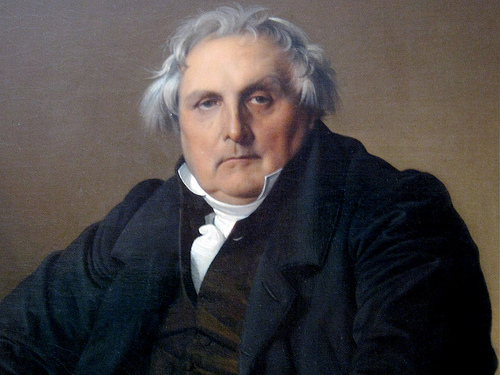
Ernest Renan (1823-1892) was a French Orientalist who was regarded highly until the Second World War. Since then, he seems to have fallen out of favor with the academia. Still, his principle of nationalism is so powerful that modern students of social sciences find it impossible to ignore it completely, in spite of their reluctance to consider it for application. Curiously enough, there is a connection between him and Iqbal and it is one that makes them indispensable to each other. Renan's passionate plea, which he made in the "Introduction" to his Collected Speeches in 1887, can take a completely new meaning if we read it in the light of Iqbal Studies. Renan had referred to his 1882 lecture "What Is A Nation?", and had said:
"I hope that these twenty pages will be recalled when modern civilization flounders as a result of the disastrous ambiguity of the words: nation, nationality, race."
Those "twenty pages", which Renan had hoped would save the world, became the intellectual premise for Iqbal's proposal about the birth of a new state. In his Allahabad Address, Iqbal quoted from this lecture of Renan in a manner which makes his own writing – also comprising of some twenty pages – a sequel to Renan's lecture, and could easily be subtitled "What Is A Nation? Part 2". Hence, the passionate warning of Renan that his lecture should be used for averting disasters may now be seen as directly addressed to Pakistanis (and by that implication to Bengalis and Indians in so far as the creation of Pakistan is a fact of their history too). They people cannot afford to disregard the warning of Renan even if the rest of the world forgets him. In their history, those twenty pages have played an actively role unlike anywhere else in the world. The key for understanding this is to consider three crucial references to Renan in the writings of Iqbal.
 An independent critical attitude
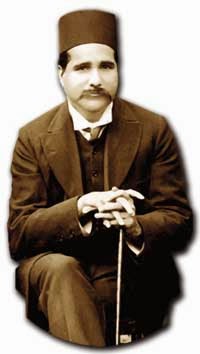
"Our duty is carefully to watch the progress of human thought, and to maintain an independent critical attitude towards it." This is the advice which Iqbal offered to his readers at a certain stage, and it reflected a practice which he had followed throughout. A very good example of this "independent critical attitude" is his engagement with the thought of Renan.
Renan was a confirmed racist who believed colored races to be inferior and possibly unfit for self-rule. He also had serious disagreement with the Christian Church. His writings also concealed a hostility towards Islam (which did not go unnoticed by Iqbal). Yet, one of the notes which Iqbal jotted down in his private notebook, apparently as a reminder to himself, was about the need to see beyond such observations:
There are some people who are sceptical and yet of a religious turn of mind. The French Orientalist Renan reveals the essentially religious character of his mind in spite of his scepticism. We must be careful in forming our opinion about the character of men from their habits of thought. (Stray Reflections, p.73)
The benefit of this approach becomes evident when we look at how it helped Iqbal to engage with the powerful mind of Renan in a creative and original manner as we shall see now.
Religion as a people-building force
In his 1882 paper, Renan had shown conclusively that geography, race, language or religion did not make a nation. About Islam, he had written somewhere that it was going to "lose the high intellectual and moral direction of an important part of the universe". Quoting this statement in his paper "The Muslim Community" (1911), Iqbal called it "a veiled hope" on Renan's part that Islam should thus fizzle out.
Yet he bypassed such quibbles and managed to meet Renan on the grounds of common principles. The first principle which Iqbal seems to have discerned from the writings of Renan was that any community, society or nation which hoped to hold itself together merely through belief in certain propositions of a metaphysical import was indeed standing on an extremely unsafe basis, especially before the advance of modern knowledge, with its habits of rationalism and criticism. (Iqbal, "The Muslim Community").
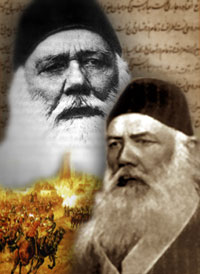
Acceptance of this empirical truth did not deter Iqbal from pursuing that new orientation of Islam which was gradually evolving in Muslim India: "Islam has a far deeper significance for us than merely religious." (Iqbal, "The Muslim Community"). This was the sum total of the cultural activities of the Indian Muslims since 1867 as well as of their social activism, their daily reality and their most valuable intellectual output, including the writings of Sir Syed Ahmad Khan, Syed Amir Ali, Maulana Shibli Numani – not to forget the poetry of Maulana Hali and Akbar Allahabadi, and the writings of young journalists like Muhammad Ali Jauhar and Zafar Ali Khan. The same collective will had also manifested in the recently formed All-India Muslim League, although the significance of that political organization was yet to be tested by history. Consequently, Iqbal made the very far-sighted proposition that the unity of religious belief in the Muslim community was supplemented by the uniformity of Muslim culture:
Mere belief in the Islamic principle, though exceedingly important, is not sufficient. In order to participate in the life of the communal self, the individual mind must undergo a complete transformation, and this transformation is secured, externally by the institutions of Islam, and internally by that uniform culture which the intellectual energy of our forefathers has produced.
Renan had described the evolution of modern European nations to show that diverse factors had gone into their making. Iqbal showed that in Asia, such factors had been provided by Islam, which had been working as much more than a religion. The vision of Islam which he offered was neither a set of metaphysical beliefs nor a two-dimensional study of "lived religion", but was through and through a people-building force (see "The Muslim Community").
This is important because Iqbal made a clear distinction between two very different roles of religion in a society. The first is what Renan had called "the absolute distinction between men in terms of their religion", and had shown to be inadequate for making a nation. Iqbal gave an implicit assent to this by stating, "Mere belief in the Islamic principle, though exceedingly important, is not sufficient," but he made an exception for religion as "a people-building force" – a phenomenon which Renan may not have realized because it was not manifested as clearly in Islam outside India as it did in Islam in India (and Renan was an authority mainly on the Middle East). As Iqbal was going to state very boldly in the Allahabad Address:
Indeed it is no exaggeration to say that India is perhaps the only country in the world where Islam, as a people-building force, has worked at its best.
This subtlety is obviously ignored by those who seek to reinforce the Islamic identity of Muslim societies in South Asia by introducing more rigid models of Islam from other parts of the Muslim world. It also seems to be forgotten by those who hope to make these societies more tolerant and enlightened by importing esoteric and metaphysical wisdom from abroad. At least in the case of Pakistan, this observation is also being ignored by those who propose to impose unpopular secularist oligarchies. All these reformers and adventurers would perhaps benefit by considering what Iqbal stated elsewhere: "The flame of life cannot be borrowed from others; it must be kindled in the temple of one’s own soul. This requires earnest preparation and a relatively permanent programme." (The Lahore Address, 1932).
The most interesting aspect of the connection between Renan and Iqbal is that it helps us restore Renan's principle of nationalism as a workable solution not only in Iqbal's society but perhaps also elsewhere in the world, and points in the direction of that empirical evidence which may qualify Renan's principle for being called, truly, "the spiritual principle of nationalism."
The spiritual principle of nationalism
 We have seen that Renan, in his 1882 lecture, had refuted the presumptions of some earlier thinkers that nations could be formed on the basis of geography, race or language. This should be of special interest to the learners of Iqbal Studies, who very well know that Iqbal launched an ideological attack against these theories of nationalism, but most of them do not realize that Iqbal did so on a premise already established for him by another great thinker.
We have also seen that Renan's assumption that religion could not provide a feasible basis for nation-building was modified by Iqbal on the grounds that this could be true about a certain conception of religion but not about another conception that was most peculiarly evidenced among the Muslims of India.
Now we may come to consider the question that if geography, race, language or "absolute distinction between men on the basis of religion" does not define a nation, then what does? The answer which Renan provided was the spiritual principle of nationalism. It had two postulates. The first explained how modern nations were formed. The second answered how they could be sustained.
What makes a nation?
Renan claimed that it was an empirically verifiable fact that a modern nation was formed on the basis of two things:
- To have performed great deeds together; and
- To wish to perform still more.
To form a nation on any other basis – even on the basis of an "absolute distinction between men on the basis of religion" – would mean disregarding the consent of the individual, and hence a negation of free will and soul, and would fail. In the words of Renan:
A nation is a soul, a spiritual principle. Two things, which in truth are but one, constitute this soul or spiritual principle. One lies in the past, one in the present. One is the possession in common of a rich legacy of memories; the other is present-day consent, the desire to live together, the will to perpetuate the value of the heritage that one has received in an undivided form. Man, Gentlemen, does not improvise. The nation, like the individual, is the culmination of a long past of endeavours, sacrifice, and devotion. Of all cults, that of the ancestors is the most legitimate, for the ancestors have made us what we are. A heroic past, great men, glory (by which I understand genuine glory), this is the social capital upon which one bases a national idea. To have common glories in the past and to have a common will in the present; to have performed great deeds together, to wish to perform still more—these are the essential conditions for being a people.
What sustains a nation?
Once we accept that nations are founded on the basis of will, it follows naturally that they can only be sustained through consent, whether obtained implicitly or explicitly:
A nation's existence is, if you will pardon the metaphor, a daily plebiscite, just as an individual's existence is a perpetual affirmation of life. That, I know full well, is less metaphysical than divine right and less brutal than so called historical right. According to the ideas that I am outlining to you, a nation has no more right than a king does to say to a province: "You belong to me, I am seizing you." A province, as far as I am concerned, is its inhabitants; if anyone has the right to be consulted in such an affair, it is the inhabitant. A nation never has any real interest in annexing or holding on to a country against its will. The wish of nations is, all in all, the sole legitimate criterion, the one to which one must always return.
The Allahabad Address
This was the principle which Iqbal invoked while delivering his presidential address to the All-India Muslim League at Allahabad in December 1930. At that hour, when civilization was indeed floundering as a result of the disastrous ambiguity of the words nation, nationality, race, Iqbal may have been the only one, perhaps in the whole world, to actually turn to those twenty pages of Renan (among other things), as he stated:
“Man,” says Renan, “is enslaved neither by his race nor by his religion, nor by the course of rivers, nor by the direction of mountain ranges. A great aggregation of men, sane of mind and warm of heart, creates a moral consciousness which is called a nation.” Such a formation is quite possible, though it involves the long and arduous process of practically re-making men and furnishing them with a fresh emotional equipment. It might have been a fact in India if the teachings of Kabir and the Divine Faith of Akbar had seized the imagination of the masses of this country. Experience, however, shows that the various caste units and religious units in India have shown no inclination to sink their respective individualities in a larger whole. Each group is intensely jealous of its collective existence. The formation of the kind of moral consciousness which constitutes the essence of a nation in Renan’s sense demands a price which the peoples of India are not prepared to pay.
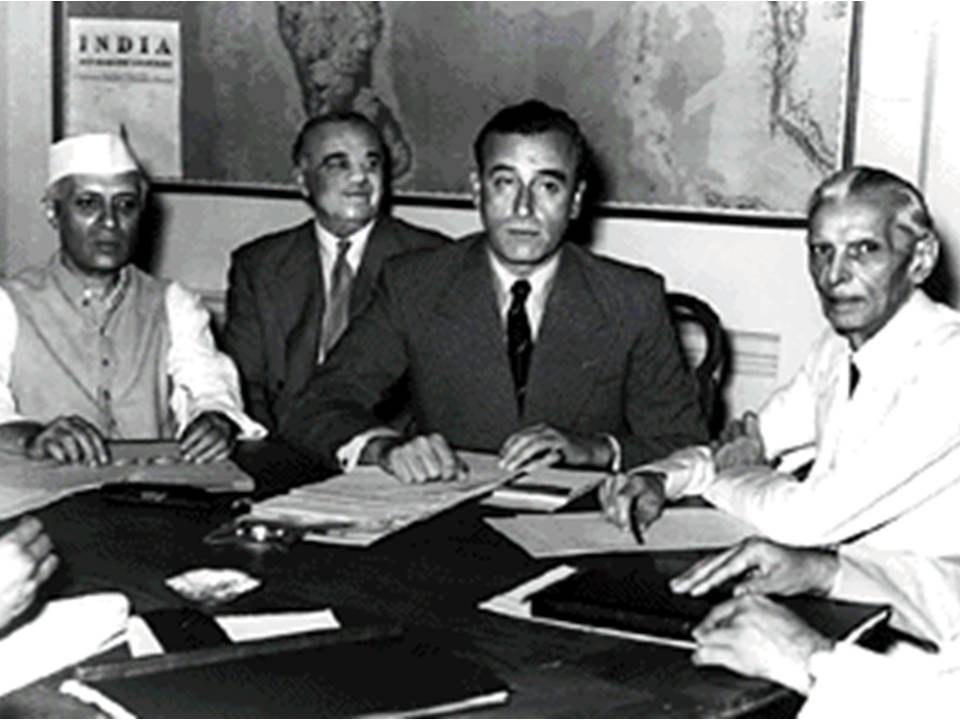 |
| "If doubts arise regarding its frontiers, consult the populations in the areas under dispute." Only one of the men in this picture could have felt happy that Renan had said such a thing. |
Conclusion
Renan did not offer his proposition as "a theory". He propounded it as an empirical principle and challenged his detractors to put it to empirical test. He was also aware that his European contemporaries were likely to discard his principle as "a fine example of those wretched French ideas which claim to replace diplomacy and war by childishly simple methods." Ruefully, he observed:
This recommendation will bring a smile to the lips of the transcendants of politics, these infallible beings who spend their lives deceiving themselves and who, from the height of their superior principles, take pity upon our mundane concerns.
It could be very rewarding to apply Renan's principle to a case study of the history of South Asia from 1887, and see what empirical evidence turns up. For this, we shall need to add the twenty pages of the Allahabad Address to the original twenty of Renan's What Is A Nation. Such a study has not been undertaken until now and still awaits some insightful and bold scholar.

Further reading
- Essential excerpt from English translation of Renan's paper "What Is a Nation?"
- Complete English translation of the paper
- Iqbal's Allahabad Address
- 'The Uniformity of Muslim Culture' in Iqbal: His Life and Our Times (2014) by Khurram Ali Shafique
Saturday, May 10, 2014
New Biography of Iqbal

Iqbal: His Life and Our TimesOriginally published on Marghdeen Learning Centre.
by Khurram Ali Shafique
has been released on May 8.
Buy it online from CreateSpace, Amazon, Amazon UK or Amazon India (among others).
This is a joint publication of Iqbal Academy Pakistan and the Cultural Institute of the Economic Cooperation Organization. The international edition has been brought out by Libredux UK. A Pakistan edition is expected by the end of May.
Continued support will be provided to readers and those interested in Iqbal Studies through this website and the Facebook Page of the Book.
Monday, May 5, 2014
Iqbal: His Life and Our Times
 |
| Cover design MelloWatts |
The mind of Goethe,
The heart of Rumi,
The message of the Quran.
This was the unparalleled legacy of the poet-philosopher credited with birthing a nation and a state, and at no other time has the world been more ready to embrace his ideas than it is right now.
The story of his mind, and what he taught, as told herein from a new and compelling angle, leads us on a trail of discovery towards a new way of life. You're invited to approach this as a handbook for implementing his life-giving ideas.
The above-quoted blurb reflects the spirit in which my new book, Iqbal: His Life and Our Times, is being offered. The book is a tribute to Iqbal by ten sovereign states, since it is being published jointly by Iqbal Academy Pakistan and the Cultural Institute of the Economic Cooperation Organization, which is the successor organization of the RCD and now includes Afghanistan, Azerbaijan, Iran, Kazakhstan, Kyrgyz Republic, Pakistan, Tajikistan, Turkey, Turkmenistan and Uzbekistan.
The international edition is being brought out by Libredux, UK, on behalf of the original publishers. It will be available from Thursday, May 8.
It can be ordered from the page on the Createspace Website. It will also be available on other websites, including Amazon. The Pakistani edition is hopefully coming out by the end of this month.
Much has been written about Iqbal but this book may turn out to be different (even from my earlier writings) because it presents Iqbal with a special focus on how his ideas can be implemented today - especially in Pakistan and the Muslim world, but also elsewhere - by individuals as well as societies. I have kept it less than 200 pages, so that it may serve as a compact handbook.
Until the book comes out this Thursday, I offer you following introduction written by two people for whom I have deep respect and gratitude.
Introduction
by
Muhammad Suheyl Umar, Director, Iqbal Academy Pakistan;
and Iftikhar Arif, Director, ECO Cultural Institute (ECI)
Dr. Sir Muhammad Iqbal (1877-1938) is the only poet and thinker in the history of world literature who has been credited with the birth of a new nation and a new state. It is therefore very befitting that a handbook about his life and thought should be brought out by an organization comprising of ten member states. The Economic Cooperation Organization’s Cultural Institute (ECI) is pleased to bring out this publication jointly with Iqbal Academy Pakistan.
Dr. Sir Muhammad Iqbal (1877-1938) is the only poet and thinker in the history of world literature who has been credited with the birth of a new nation and a new state. It is therefore very befitting that a handbook about his life and thought should be brought out by an organization comprising of ten member states. The Economic Cooperation Organization’s Cultural Institute (ECI) is pleased to bring out this publication jointly with Iqbal Academy Pakistan.
In addition to his unique status in Pakistan, Iqbal also happens to be either a national poet or a household inspiration in several other countries including Iran, Tajikistan, Kazakhstan, Kyrgyzstan, Turkmenistan, Uzbekistan and India. In Turkey, his symbolic grave stands in the compound of the mausoleum of Maulana Jalaluddin Rumi. In the universities of Heidelberg and Cambridge, there are chairs or fellowships in his name. Roads, buildings and monuments have been named after him in other countries too, including Mauritius.
Iqbal: His Life and Our Times fulfils the need for a simple and reliable introduction to the life and work of this unmatched genius, highlighting the practical relevance of his ideas for those who wish to consider them for implementation. The author, Khurram Ali Shafique, is well-known in the field of Iqbal Studies. The awards which he has received for his previous publications include the coveted Presidential Iqbal Award.
The present volume includes many findings that are the outcome of the author’s original research. Of special interest to the general readers as well as the experts would be the evidence, presented here for the first time, which establishes a historical connection between the political ideas of Iqbal, the American thinker Mary Parker Follett and the Bengali visionary C. R. Das.
We are hoping that this volume will offer much by way of looking at the present times from new avenues.
It is shown here that the views expressed by Iqbal in his poetry and prose formed a coherent system of thought, and the same was implemented by him through political and social action.
This is to dispel the myth which has been preventing a deeper understanding of Iqbal’s thought until now, i.e. the false but widely perpetuated assumption that the ideas presented by Iqbal were either inconsistent with each other or they kept undergoing such perpetual changes throughout his life that they cannot be considered for implementation in any other time.
The system of his thought and its underlying principles are being presented here, perhaps for the first time. It is also being shown that in spite of its inner coherence, the system of Iqbal’s thought kept pace with the evolution of the collective life of his community.
This evolution can be studied by dividing the intellectual life of the poet-philosopher into three stages: inquiry, discovery and transcendence. The duration of each stage has been established here on the basis of biographical and textual evidence, and the book has been divided into three chapters accordingly.
Each of these three stages started in his mental life when his community adopted a new goal collectively. The goals, their relevance to the world and humanity, their implications for Iqbal, and his contribution towards achieving them are issues which are being discussed here in a fresh light. This may turn out be one of the most significant contributions which this book will make to the subject.
If nations of the world desire to come closer in their hearts and minds, they cannot ignore to learn about the ideas, emotions and visions of each other. The Economic Cooperation Organization’s Cultural Institute (ECI), formed through a charter at the third summit meeting of the countries of ECO held at Islamabad in 1995, aims at fostering understanding and the preservation of the rich cultural heritage of its members through common projects in the field of the media, literature, art, philosophy, sport and education.
The present volume is being offered in line with this vision, and with the conviction that it is important for everybody to be informed about the ideas of Iqbal, since they may be counted among those cultural forces which have gone into shaping a significant part of our world.
This conviction is shared by Iqbal Academy Pakistan, a statutory body of the Government of Pakistan, originally established through an act of parliament in 1951 and reinforced through an ordinance in 1962. The aims and objectives of the Academy are to promote and disseminate the study and understanding of the works and teachings of Iqbal. The Academy has been translating its objectives into action and activity through a number of measures including publication programme, IT projects, outreach activities, Iqbal Award Programme, website, research and compilation, audio-video, multimedia, archive projects as well as exhibitions, conferences, seminars, projection abroad, research guidance, academic assistance, donations and library services.
We hope that the readers will benefit from the book which we are offering here jointly, and this will go a long way in achieving our common objectives.
Tuesday, April 1, 2014
Ayaz Amir: between ignorance and dishonesty
 |
| Ayaz Amir. Image from The News International |
I have read with great interest the recent
article ‘Poet of the soul, thy occasional silences’ by Ayaz Amir published in The NewsInternational on Friday, March 28. I am surprised to see that the esteemed
writer is so unfamiliar with facts about the life and writings of Allama Iqbal,
and has based his writing on sheer sentiment at the cost of truth.
He complains
that ‘in all his work, so much of it transcendent,
there is no mention of Jallianwala Bagh, an event which shook India. Nor did
Iqbal take a public position on it.’ This is not true. Iqbal wrote a short but very moving poem in Urdu, in
which he advised the reader not to withhold tears on the plight of those
‘martyrs’. The poem was published in newspapers at that time and has been
included in several anthologies and biographies since then. It can also be
found on page 460 in my Urdu biography of the middle years of Iqbal’s career, Iqbal:
Darmiani Daur, which covers the period 1914-1922.
I am copying the poem here along with an
English translation done by my friend, Akhtar Wasim Dar:
جلّیانوالہ باغ امرتسر
ہر زائرِ چمن سے یہ کہتی ہے
خاکِ پاک
غافل نہ رہ جہان میں گردُوں کی چال سے
سینچا گیا ہے خونِ شہیداں سے اس کا تخم
تُو آنسووں کا بخل نہ کر اِس نہال سے
[Translation]:
Jalianwalla Bagh Amritsar
The sacred land urges to every pilgrim of the garden
Not to remain inattentive in this world to the ways their destiny works.
Its seed has been watered by martyrs’ blood
Do not withhold your tears from its saplings.
Yet, Mr. Amir chooses to call the poetry of Iqbal ‘poetry at the same time
silent on such a tragedy as the Jallianwala Bagh massacre’! We understand that
it is really too much for some Pakistani journalists to stop telling lies, but
one wonders what happened to the old-fashioned editorial discretion. I mean,
seriously, does The New International not have even one well-informed
person in its editorial team, who could have taken a look at Mr. Amir’s
writing before it went to press?
Mr. Amir is partially correct in suggesting
that the holocaust which occurred in Punjab in 1947 was only indirectly linked
to the partition of India and was more directly a result of the partition of
Punjab. Yet, again I wonder from where did he get his information that Iqbal
and the founding fathers of Pakistan did not foresee it (as he says, ‘Mention
should also be made of a failure of the imagination or a failure of foresight,
on Iqbal’s part as on that of the League leadership as a whole…the failure to
see that if ever the demand for a north-west Muslim state was met, it would
surely and inevitably entail the partition first of Punjab and then only of
India’).
Talks about the partition of India, and the
partitions of Punjab and Bengal, had started in the early 1920s. Therefore, it
required neither imagination nor foresight on part of Iqbal and his club to see
it – but of course it requires general knowledge and hindsight on part of Mr.
Amir to know this (and how much we wish that Mr. Amir was in possession of
either of these).
Ironically enough, the person who initiated the discourse about
these partitions in 1921 was none other than Hasrat Mohani – the same about
whom Mr. Amir has wished so melodramatically that there were ‘a few more Hasrat Mohanis’. Mohani made some bold suggestions to
this end in his presidential address to the annual session of All-India Muslim
League in 1921, and followed them up with even more radical propositions along
these lines.
Lala Lajpat Rai, in sync with Hindu Mahasabha, answered
Mohani by demanding the partition of Punjab as well as the partition of Bengal,
and a partitioning of India between ‘a Hindu India and a Muslim India’. Rai did
that in a series of thirteen articles, collectively titled ‘The Hindu-Muslim
Problem’, which were published in November-December 1924 (apparently in view of
the impending annual session of the Indian National Congress, since the annual
sessions for the two preceding years had been consecutively presided over by
advocates of Muslims nationalism, i.e. C. R. Das in 1922 and Maulana Muhammad
Ali Jauhar in 1923, and their views were anathema to obscurantist leaders like
Rai).
Hence the Hindu demand for the partition of Punjab and Bengal was already
on the table by the time Iqbal came out with his proposition for a consolidated
Muslim state in 1930.
Mr. Amir complains that Iqbal did not say much
about Bhagat Singh. Here, one cannot overlook the macabre irony that Bhagat
Singh was out to take revenge for the death of the same Lala Lajpat Rai, who
had originally demanded the partition of Punjab which Mr. Amir loathes so much
(and given the overall quality of scholarship reflected in Mr. Amir’s writing,
we cannot be sure if he is even aware of these facts).
On a more serious note,
while it is true that Iqbal did not say much about Bhagat Singh, many other freedom-fighters
were also silent on that issue but this is not usually considered as sufficient
ground for questioning their bonafide. Even Gandhi didn’t do much to save Bhagat
Singh, and this does not bring down Gandhi from his high pedestal.
It seems that the underlying issue which Mr.
Amir is trying to reach here is whether Iqbal was sufficiently opposed to British
imperialism, and whether Iqbal did something to that effect. It is well-known
even to the detractors of Iqbal that he took a very well-defined stand against
colonialism, not only as a poet but even as a politician and social activist.
Granted that his stand was in keeping with his
worldview, and anybody who disagrees with that worldview, like Mr. Amir does, is
welcome to question whether Iqbal’s stand was effective or not. Unfortunately,
such an exercise pre-requires a wider range of reading than Mr. Amir seems to
be capable of, and therefore he takes the easier path of misleading his readers
by stating, in clear contradiction to known facts, that Iqbal did not take a
stand against colonialism at all. This is where Mr. Amir crosses the line
between ignorance and intellectual dishonesty, in the direction of the latter.
In the passing, I would like to mention just
one anecdote about Iqbal’s well-known opposition of British imperialism. The declassified
documents in the archives of the former princely state of Hyderabad Deccan have
revealed that when the ruler of that state was considering a proposal for
granting patronage to Iqbal, he was advised by his counsellors against it on
the grounds that Iqbal was too well-known for opposing British imperialism, and
any patronage to Iqbal would displease the foreign rulers.
Pakistan is not suffering today because its founding
fathers lacked moral courage or foresight, as Mr. Amir has tried to insinuate.
It suffers today because a large majority of our educated class and our
intelligentsia is unaware of the basic facts of our history, and Mr. Amir
happens to be one sorry example of this. Maybe he is too old to change his habits
now and start getting his facts right, but the younger lot should rise up to
their moral duty and find out those truths about our history which need to be
known.
Comments can be posted directly at the website of Marghdeen Learning Center.
Comments can be posted directly at the website of Marghdeen Learning Center.
Sunday, May 19, 2013
The Election Aftermath: an Iqbal Studies Perspective

"An election which is only a partial expression of the people’s will is null and void." (Hazrat Umar Farooq, r.a.)
This saying of the second caliph was cited by Iqbal in his paper 'Political Thought in Islam' (1908). How do the recent elections stand in the light of this saying? - blatantly rigged, voters stopped from voting or forced to vote against their will, and so on.
The purpose of beginning this post with that quote is to remind us that Islam of the free people is different from the religion of the slaves. It is comparatively more concerned with freedom of nations and civic liberties than worrying about the wardrobes of women or teaching the victims to show "compassion" to their oppressors. "Democracy, then, is the most important aspect of Islam regarded as a political ideal," according to Iqbal ('Islam As A Moral and Political Ideal'; 1909).
If Iqbal were alive today, he may have eagerly declared that the present protests against rigging were a step in the direction of establishing a truly Islamic society - and perhaps the most important step in that direction since 1949. It would not have mattered to him that the protesters are not using the name of religion. He would have repeated his words from some other occasion: "The Muslim [of this country], I believe, instinctively realizes the peculiar nature of the circumstances in which he is placed..." ('Islam and Ahmadism'; 1935).
Iqbal's advice to the political activists in Pakistan may have been the same which was offered by him to the political reformers of other Muslim countries in 1908:
"They would certainly impress [their people] more if they could show that their seemingly borrowed ideal of political freedom is really the ideal of Islam, and is, as such, the rightful demand of free Muslim conscience." (Political Thought in Islam').
The cornerstone of this ideal, according to Iqbal, is "the idea of universal agreement". On the basis of the above-cited quote from Hazrat Umar, Iqbal stated in his 1908 paper: "The idea of universal agreement is in fact the fundamental principle of Muslim constitutional theory."
Let's try to understand what he meant by "universal agreement" and how it can help us analyze the current situation in Pakistan.
Iqbal believed that society was like an organism, and "if one portion reveals a certain organic craving, the material to satisfy that craving is almost simultaneously produced by the other." ('The Muslim Community - A Sociological Study'). The example which he offered for explaining this was that the modernism of the Aligarh Movement was complemented by the healthy conservatism of Akbar Allahabadi. It is possible to conclude from this example that if we desire to find out what the Muslim community of British India collectively wanted in that period, we would have to place the ideals of the Aligarh Movement side by side with the poetry of Akbar Allahabadi.
There was no "agreement" between the two, but the collective will of the community resided in the point where these two contradictory ideas converged: preserving and strengthening the national character. Hence, this was the point of "universal agreement" even though the two schools of thought in the community appeared to be opposed to each other.

From the perspective of the older democracies, the emergence of mutually exclusive power zones may serve as a threat to the federation. Indeed, they may, if we repeat the mistakes of the past.
From the perspective of Iqbal Studies, this situation is an opportunity (and so was the situation in 1970-71), for creating a prototype which could serve as the model for "a world-state [whose] structure will be determined not by physical force, but by the spiritual force of a common ideal." This idea, presented by Iqbal in his 1908 paper, perhaps deserves to be explored in greater detail now.
Sunday, May 12, 2013
Election Replay
 |
| Photo Source: ET Blogs |
The first so-called elected government in Pakistan to complete its tenure was the PPP regime of Zulfikar Ali Bhutto in 1977. Elections were held for the national assembly on March 7, 1977, and the results were met with serious allegations of rigging. The opposition boycotted the elections to the provincial assemblies, held on March 10. A deadlock ensued and martial law was eventually imposed on July 5.
The election day this year was reminiscent of 1977 in some ways, although not as bad. It was different mainly because one major contestant could be trusted not to use rigging and un-democratic methods. Needless to mention, this was Imran Khan with his Pakistan Tehrik-i-Insaaf. This may have made a difference.
Throughout the past, almost every major contestant has been resorting to some show of force for intimidating their opponents during the elections. Since everybody was involved, it was very easy to blame the political culture of the country and to say that a nation like Pakistan could not have true democracy; that this is the best which we can get. This sentiment has been reflected in the life and work of those intellectuals who have been supporting various political leaders as champions of democracy without asking those leaders to refrain from un-democratic measures for seizing and holding power.
The same sentiment is reflected in the statements of the election commission, who are congratulating us on a "fair and free" election despite our first hand experience to the contrary. Clearly, these people think and have been thinking that the nation deserves no better.
The first lesson to be learnt from the recent elections is that we deserve better. We must concede that it is possible to have true democracy in Pakistan. If one political party can rely on purely legal means for securing a considerable share in the national assembly and a sweeping victory in a turbulent and traditionally backward province, why others cannot do the same?
Next post: "Elections Results: an Iqbal Studies Perspective"
The election day this year was reminiscent of 1977 in some ways, although not as bad. It was different mainly because one major contestant could be trusted not to use rigging and un-democratic methods. Needless to mention, this was Imran Khan with his Pakistan Tehrik-i-Insaaf. This may have made a difference.
Throughout the past, almost every major contestant has been resorting to some show of force for intimidating their opponents during the elections. Since everybody was involved, it was very easy to blame the political culture of the country and to say that a nation like Pakistan could not have true democracy; that this is the best which we can get. This sentiment has been reflected in the life and work of those intellectuals who have been supporting various political leaders as champions of democracy without asking those leaders to refrain from un-democratic measures for seizing and holding power.
The same sentiment is reflected in the statements of the election commission, who are congratulating us on a "fair and free" election despite our first hand experience to the contrary. Clearly, these people think and have been thinking that the nation deserves no better.
The first lesson to be learnt from the recent elections is that we deserve better. We must concede that it is possible to have true democracy in Pakistan. If one political party can rely on purely legal means for securing a considerable share in the national assembly and a sweeping victory in a turbulent and traditionally backward province, why others cannot do the same?
 |
| Photo Source: RFI |
Saturday, April 13, 2013
Iqbal and the anti-blasphemy law in Russia
 |
| Picture from See It Through My Eyes |
Russian MPs have given initial approval to an anti-blasphemy law with tougher jail terms or fines for anyone found guilty of offending religious feelings... The bill says blasphemy could incur up to three years in jail or a fine of up to 300,000 roubles ($9,700;£6,300). (BBC News)
The anti-blasphemy law passed by the lower house of the Russian parliament is making headlines these days. This may remind us of what Iqbal wrote long ago, at a time when Russia was the stronghold of Bolshevism and a role model for the atheists. In an open letter to the British author Sir Francis Younghusband, published in The Civil and Military Gazette on July 30, 1931, Iqbal wrote:
I do not myself believe that the Russians are by nature an irreligious people. On the contrary, I think that they are men and women of strong religious tendencies and the present negative state of [the] Russian mind will not last indefinitely, for no system of society can rest on an atheistic basis. As soon as things settle down in that country and its people have time to think calmly, they will be forced to find a positive foundation for their system.
Whether or not the present anti-blasphemy law is a step towards "a positive foundation" for the Russian system, the bill contains a reference to religions that are "an integral part of Russia's historical inheritance" (i.e. Christianity, Islam, Judaism and Buddhism). Indirectly, this assertion corroborates Iqbal's basic assertion that Russians are "men and women of strong religious tendencies".
Tuesday, April 9, 2013
Two perceptions about Islam

I have received very encouraging response to
the emails about spiritual democracy. Before I share my understanding of this
concept, I would like to clarify a basic point. There are two different
perceptions about Islam today, and spiritual democracy is relevant only to the
first.
The first version dominated the Muslim thought from
1887 to 1953. Its followers included Sir Syed
Ahmad Khan, Syed Jamaluddin Afghani, Muhammad Ali Jauhar, Iqbal, Muhammad Ali
Jinnah and many others. On their behalf, Iqbal summarized the purpose of Islam in these words:
“Give man a keen sense of respect for his own personality, let him move fearless and free in the immensity of God’s earth, and he will respect the personalities of others and become perfectly virtuous.” (Iqbal, 1909)
This, according to Iqbal, was the unique idea which Islam contributed
to human thought and which did not exist before the advent of Islam.
Since 1953, a different perception has gradually
become dominant in Muslim thought and has also been recognized by the academia in
the West. We may call it conservative Islam, but whatever name it is given, the basic idea behind it is that a human being cannot be let alone and needs to
be constantly supervised by authority figures.
This is actually an antithesis of the spirit of
Islam. It is a recycling of the pre-Islamic worldview, if we are to believe
Iqbal, who said:
“The opposite view, the doctrine of the depravity of man held by the Church of Rome, leads to the most pernicious religious and political consequences. Since if man is elementally wicked, he must not be permitted to have his own way: his entire life must be controlled by external authority. This means priesthood in religion and autocracy in politics.”
It should not surprise us that this pre-Islamic
“doctrine of the depravity of man held by the Church of Rome” manifested itself
in the Muslim world soon after independence: some of our religious elite must
have been influenced by the European masters during the long night of
colonialism (and Iqbal anticipated this as “the religion of slaves” in 1927, in
Persian Psalms).
The difference
between these two perceptions of Islam is important to be remembered. “Spiritual democracy” is “the ultimate goal of Islam” only according to the first perception. This needs to be clarified before any meaningful discourse on this issue can take
place.
Thursday, April 4, 2013
5 Principles of Spiritual Democracy

The following five statements, in my understanding, constitute the basic principles of spiritual democracy.
The statements are simple but they can bring a paradigm shift when understood in context (and that shall be attempted in the future posts). Also, they form a process and must be taken in the order suggested here. For instance, the proposition that Islam does not allow separation between Church and State is well-known but its practical implications would obviously depend upon our beliefs about the individual and his or her relationship with society. Therefore, those concepts must be clarified before attempting this rather advanced proposition.
More in the future posts. For now, as we go through each of these statements, let's ask ourselves: does it challenge our existing views in any manner?
1. Individual:
“The essential nature of man, then, consists in will, not intellect or understanding.”
2. Society:
“The idea of universal agreement is in fact the fundamental principle of Muslim constitutional theory.”
3. Leadership:
“By leaders I mean men who, by Divine gift or experience, possess a keen perception of the spirit and destiny of Islam, along with an equally keen perception of the trend of modern history.”
“By leaders I mean men who, by Divine gift or experience, possess a keen perception of the spirit and destiny of Islam, along with an equally keen perception of the trend of modern history.”
4. Religion and State:
“The State with us is not a combination of religious and secular authority, but it is a unity in which no such distinction exists.”
5. Goal:
“…the immortality of a people, as Nietzsche has so happily put, depends upon the incessant creation of worths. Things certainly bear the stamp of divine manufacture, but their meaning is through and through human.” Sunday, March 31, 2013
Spiritual Democracy

Six years ago, I wrote a fantasy about the great Sufi master Maulana Rumi changing the world after being elected the ruler of a kingdom. From this fantasy was derived the title of my book as well as this blog and the newsletter: The Republic of Rumi.
The inspiration behind that fantasy was the fact that the foremost disciple of Rumi in modern times was Iqbal, and he is actually being recognized as a national hero in several states. Pakistan claims to have been conceived by him. Some of the Central Asian states acknowledge him as a national poet. In Iran also, he is held in high esteem. Hence, through Iqbal, the spirit of Rumi has actually been taking over the affairs of states since the middle of the 20th Century, at least in some ways.
This was the meaning of the fantasy which I wrote six years ago. At that time it was not possible for me to show how the message and the influence of Iqbal can be used for actually creating the kind of government, commonwealth or world order that may be called a "republic of Rumi". I think, now I am in a position to share some interesting findings in this regards.
The keyword is "spiritual democracy". Iqbal stated in the sixth lecture of the Reconstruction (1930) that the ultimate aim of Islam was some kind of a "spiritual democracy". He said that it was to be evolved out of "the hitherto partially revealed purpose of Islam".
I feel that it may be a good idea if this blog and newsletter could be used mainly for elaborating this concept at least for some time. I hope that this suggestion would be welcome by most of the readers - and I would like to hear from you what you think about it.
Monday, March 25, 2013
A Message from the East (2010)

First published by Iqbal Academy Pakistan in 2010
ISBN 978-969-416-445-8
pp.48
Price: Rs.200
Order online within Pakistan: marghdeen@gmail.com (visit online Bookstore for details).
Iqbal could see the irony that so many of his generation had received inspiration for action from the writings of Western poets and thinkers in order to get rid of that fatalism which had taken roots in the East in the days of its decline. Iqbal was among those who did not stop here but also rediscovered the past masters of the East through research and finally took Rumi, the great Persian poet, as his guide. However, as he now looked back at the West, he found it to be in the grip of the same defeatist mentality which appears in nations in their periods of decline. A Message from the East was compiled against this backdrop. It reflected the best tradition of Persian poetry but also alluded to icons of Western learning. The preface aptly declared the book to be a friendly response to West-Oestlicher Divan of the great German poet-philosopher Johann Wolfgang Goethe.
The selection offered in this junior edition comprises mainly of translations by A.J. Arberry, Hadi Husain and Mustansir Mir.
Note: Since then, I have switched to "The Message of the East", which conveys the meaning of the original Persian title better. At that time I was following Hadi Husain, who had styled it "A Message from the East" in his translation of the book.
Sunday, March 24, 2013
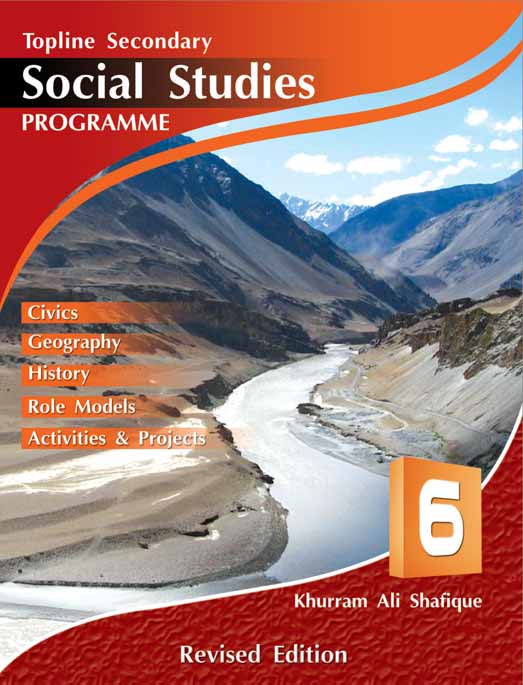
Topline Social Studies (2012)
Topline Secondary Social Studies Programme (Revised Edition) by Khurram Ali Shafique. This revised edition first published in 2013 in Pakistan by Topline Publishers.
 |
Six
ISBN 978-969-567-057-6
|
 |
Seven
ISBN 978-969-567-058-3
|
 |
Eight
ISBN 978-969-567-059-0
|
Saturday, March 23, 2013
Javidnama (2006)

Check Urdu Version
First published by Iqbal Academy Pakistan in Junior Editions Series in 2006; reprinted several times since then.
ISBN 969-416-371-4
pp.48 (US Letter size; full-color)
Price Rs.200
Order online within Pakistan: marghdeen@gmail.com (visit online Bookstore for details).
Read online (free) on the old website
On a lonely evening, Iqbal meets Rumi. Together they embark on a journey to the end of the world and beyond - meeting those who cannot be seen, and those who are long gone. The worlds of spirit and matter combine, leading the poet into the presence of the Divine.
Javidnama was described by Iqbal as his "life's work" and can be justly regarded as one of the most important books of the modern times. This abridged edition presents the grand epic in simple contemporary English.
Friday, March 22, 2013

Stray Reflections (2006)

Published by Iqbal Academy Pakistan in 2006; reprinted a few times since then. Previous editions published in 1961 (reprinted 1987) and 1992.
pp.264
ISBN 969-416-003-0
Price
Stray Reflections is the name given by Allama Iqbal to his private notebook, which he kept for some time in 1910 to jot down his random thoughts and reflections. Many of these notes were incorporated in his prose works at that time, and some were later offered for print in newspapers after revision.
The notebook, which offers some insight into the development of Iqbal's mind, was first edited and published by Dr. Javid Iqbal, the poet's son, twenty-four years after the poet's death.
The present revised edition is enriched by comprehensive notes and also includes 'Stray Thoughts', reflections of similar nature published by Iqbal at a later stage. Facsimiles of the original notebook in Iqbal's own hand are also included in this edition, making it a collector's item for anyone who is interested in the development of one of the greatest minds of the twentieth century.
Thursday, March 21, 2013
2017: the Battle for Marghdeen (2012)

First published by Liberadux UK
pp.84
ISBN/EAN13 0957141637 / 9780957141636
Price printed version: US$5.00 (from CreateSpace)
Ebook ISBN 9780957141629
Price ebook: US$1.99 (from Smashwords)
ISBN/EAN13 0957141637 / 9780957141636
Price printed version: US$5.00 (from CreateSpace)
Ebook ISBN 9780957141629
Price ebook: US$1.99 (from Smashwords)
Marghdeen is an ideal society conceived by Dr. Sir Muhammad Iqbal (1877-1938), a foremost thinker of modern times. It is a world where life is inside-out, people know their destinies and there is no poverty, neediness, crime or injustice.
In 2017: The Battle for Marghdeen, the author shows how such a society can be achieved in a short space of time, as long as we are prepared to change our perception about the world we live in. The book presents the basic principles for achieving Marghdeen, illustrated with examples from modern history. There is a special emphasis on societies that already acknowledge Iqbal as their thinker, but these principles can be applied anywhere in the world.
Wednesday, March 20, 2013
Shakespeare According to Iqbal

First published by Iqbal Academy Pakistan in 2010
ISBN 978-969-416-448-9
pp. 48
Price Rs. 70
Order online within Pakistan: marghdeen@gmail.com (visit online Bookstore for details).
Dr. Sir Muhammad Iqbal (1877-1938) was among those modern thinkers who had tremendous influence on the East, especially the Muslim world. He was also a great admirer of William Shakespeare, and unlike many of his contemporaries, his praise for the Bard was not riddled with skepticism.
Here is a pioneering attempt by historian and playwright Khurram Ali Shafique to revisit Shakespeare in the light of Iqbal's thought in order to discover some revealing connections between the work of Shakespeare and outstanding poets of the East including Nezami Ganjavi, Mawlana Rumi and Iqbal himself.Partly written like an extended parable, this book is meant to be of some interest for the general reader as well as the expert in the field.
Tuesday, March 19, 2013
The Beast and the Lion (2007)

First published in Pakistan by Iqbal Academy Pakistan in 2007
ISBN 978-969-416-398-7
pp.40
Price Rs.50
Order online within Pakistan: marghdeen@gmail.com (visit online Bookstore for details).
The poetry of W. B. Yeats is generally acclaimed to be representing the devastation, despair and decadence of the 20th Century. This groundbreaking study attempts to show that the vision of Yeats was grounded more in his philosophical premise than in the objective reality of his times. Contrary to the common perception of Yeats as a cosmopolitan visionary who has something to offer everyone, this study shows that the terror projected in such poems as "The Second Coming" was a fear of the political reawakening of the East!
Subscribe to:
Posts (Atom)